
REVIEW · BELFAST CITY WALKING TOURS
Private Belfast Explore Like a Local
Belfast looks calm now, but the stories linger. This private, hotel-picked-up day strings together botanic charm, campus architecture, and street-level history from the Peace Wall to the shipyard skyline. It is a 2 hour 40 minute to 3 hour route designed for people who want context fast, without spending the whole day figuring out where to stand.
I especially love how the stops are chosen for learning, not just photos. A good guide turns places like Divis Tower and the Falls Road and Shankill interface area into a timeline you can actually follow. I also like the practical setup, round-trip transfer from central Belfast plus a private, air-conditioned vehicle, so you can stay focused on the city instead of traffic and directions.
One consideration: this is a tour of politically charged history, and some guides may lean the way they explain it. If you want a very neutral tone, bring that preference up early and ask your guide to frame events with care.
In This Review
- Key highlights to know before you go
- Price and logistics: what you really get for $638.11
- Botanic Gardens: Victorian Belfast, with real-world details
- Queen’s University Belfast: architecture and the Queen’s Quarter vibe
- RISE sculpture at Broadway roundabout: modern Belfast meets everyday traffic
- Divis Tower and the Troubles interface: history you can see from the street
- Peace Wall stops: murals, locked gates, and the meaning of separation
- St Peter’s Cathedral and Clonard Martyrs: faith sites tied to the conflict
- St Peter’s Cathedral (Divis Street)
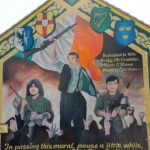
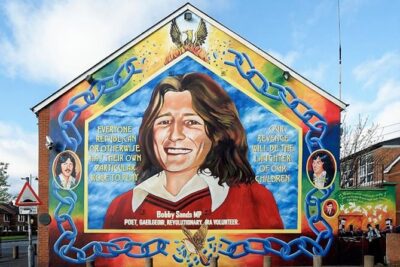
- Bobby Sands mural: hunger strike history in a single frame
- Clonard Martyrs Memorial Garden
- Shankill Road: loyalist heartland and a very different local reality
- Belfast Castle, then back to city landmarks: what “big Belfast” feels like
- Belfast Castle viewpoint stop
- Albert Memorial Clock Tower
- Big Fish on Donegall Quay
- Titanic Quarter without the full museum bill
- Samson and Goliath cranes
- SS Nomadic and Titanic Quarter photo moments
- Crown Liquor Saloon ending: a Victorian pub wrap-up
- A note on walking, safety, and how the guide shapes the tone
- Who this private Belfast tour suits best
- Should you book this private Belfast Explore Like a Local tour?
Key highlights to know before you go
- Private guide attention that lets you ask questions as you move, especially around the Troubles era
- Central Belfast pickup and drop-off that saves time and keeps the day easy
- Peace Wall and murals route through the Falls Road and Shankill Road area
- Mix of Belfast eras, from 1800s gardens and universities to the modern Titanic Quarter skyline
- Convenient “photo stops” for SS Nomadic and Titanic Quarter, without committing to big ticket museums
- A thoughtful ending at the Crown Liquor Saloon, a classic Victorian gin palace pub
Other Belfast walks worth the shoe leather
Price and logistics: what you really get for $638.11
At $638.11 per person for roughly 2 hours 40 minutes to 3 hours, this is not a budget tour. The value comes from three things that add up quickly if you try to DIY it.
First, it is private. Your group stays together the whole time, which matters on a route that includes emotionally intense sites and close street art. Second, you get round-trip transfer from all central Belfast accommodations, handled by your driver, with an air-conditioned vehicle. That reduces the stress factor and gets you to multiple neighborhoods with minimal time wasted in transit.
Third, many stops include listed admission tickets. Even if you only spend 10 to 30 minutes at a site, that ticket inclusion helps keep the day from becoming an add-on marathon. If you are planning a short trip to Belfast, this format is a smart way to “stack” major sights without paying for separate guided entries.
Tip for value: if you have only a day, or you hate the idea of walking between dispersed neighborhoods with no plan, this private route makes the most sense.
Botanic Gardens: Victorian Belfast, with real-world details
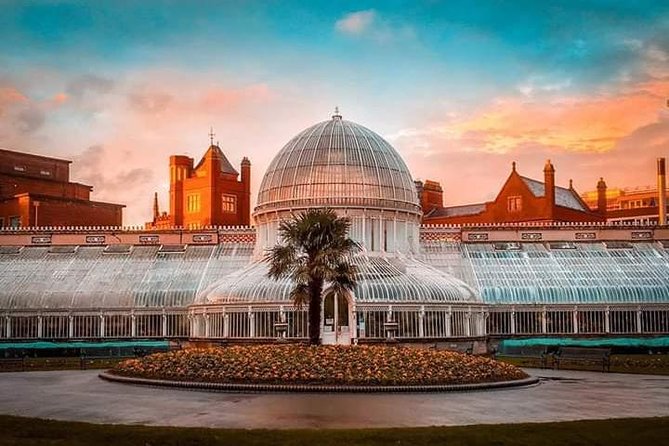
You start at Botanic Gardens, a 28-acre pocket of south Belfast that opened in 1828. This is one of those places that helps you understand Belfast before you hit the heavy stuff.
What I like about beginning here is that it softens the city. You get a sense of Victorian civic pride, not just political headlines. The park connects to Queen’s Quarter, with Queen’s University nearby and the Ulster Museum at the main entrance.
Two highlights here matter for your visit:
- The Palm House conservatory (with its foundation stone laid in 1839 and completed in 1840). It is an early, curvilinear cast iron glasshouse style and a signature Belfast feature.
- The Tropical Ravine, which is part of why this garden attracts locals, students, and visitors year-round.
The practical rhythm: your stop is about 30 minutes, so you can walk, take photos, and still stay on schedule for the rest of the day.
Possible drawback: this is a garden stop, not a long wander. If you love plants and want time to linger, plan your own extra time in Belfast on another day.
Queen’s University Belfast: architecture and the Queen’s Quarter vibe
Next comes Queen’s University Belfast, chartered in 1845 and opened in 1849 as Queen’s College, Belfast. This area, Queen’s Quarter, functions like a cultural hub and a physical anchor for Belfast’s “thinking city” side.
Even if you are not there to study, the tour angle is smart. You learn how the institution grew out of earlier higher education efforts dating back to 1810. You also see how architecture and education overlap in the city’s identity.
The stop is shorter, about 15 minutes, so it is mostly about orientation and context. Your guide can point out the Lanyon Building and explain how the early school fit into a broader idea of education for Catholics and Presbyterians as a counterpart to Trinity College Dublin.
Why this matters to your day: it sets up a contrast. Gardens and learning first, then you move into memorials and interface streets. That contrast makes the rest of the tour easier to process.
More trips that keep the group to your own party


RISE sculpture at Broadway roundabout: modern Belfast meets everyday traffic
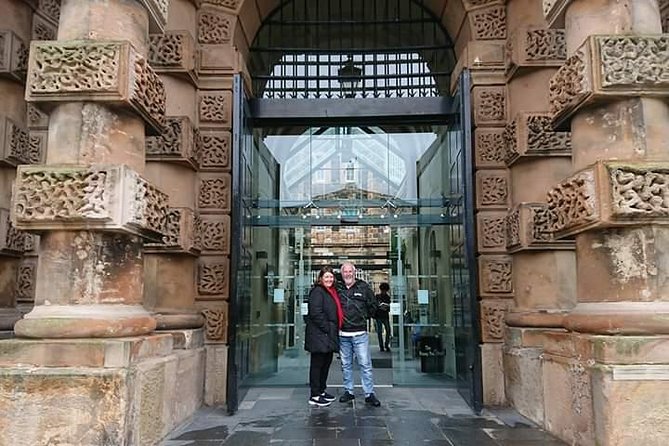
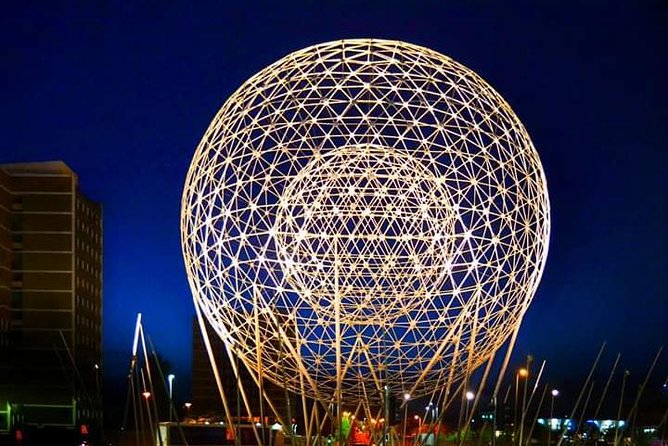
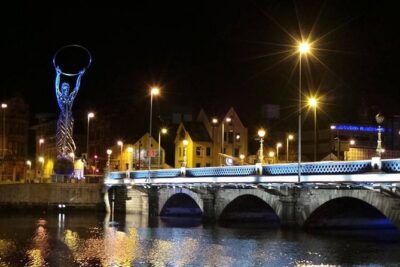
RISE, the spherical metal sculpture by Wolfgang Buttress, is next. It is hard to miss. At 37.5 meters high, it sits at a main gateway junction where tens of thousands of cars pass each day.
If you only drove past it, you might think it is just public art. With a guide, it becomes a signpost. Your day connects the idea of Belfast as a city in motion to the fact that this place has also been shaped by conflict, rebuilding, and public spending on new projects.
One fun detail worth noticing: RISE has nicknames tied to its location, including The Balls on the Falls and The Westicles. Those names reflect how locals talk about major landmarks, especially ones that feel instantly recognizable.
Your stop is around 10 minutes, so treat it like a quick reset between heavier stops.
Divis Tower and the Troubles interface: history you can see from the street
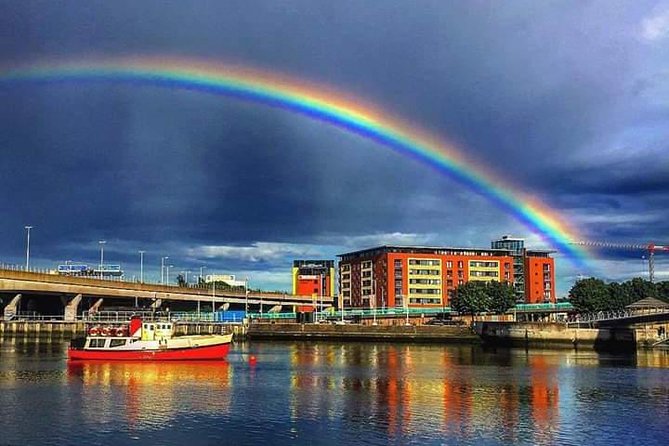
Divis Tower is where the day’s tone shifts. It is a 20-floor, 61 meter tower built in 1966 as part of the Divis Flats complex, designed to house large numbers of residents. It stands near the interface between Falls Road and Shankill Road.
What makes this stop powerful is that it connects housing policy to conflict. You get the big picture: a vertical complex created for thousands of residents, later becoming a flashpoint, and then changes after the armed campaign ended.
Your guide’s job here is crucial. You should expect a sober explanation of events linked to Divis Tower, including:
- The death of Patrick Rooney, a nine-year-old killed in August 1969 during street violence.
- The 1981 killing of Emmanuel McClarnon by an Army sniper from the top floors.
- The later dismantling and reinstatement of the British Army observation post.
Your scheduled time is about 15 minutes. That is short, but it is enough for a guided overview if your guide keeps it clear and chronological.
Consideration: this is emotionally heavy history. If you prefer light, breezy tours only, this may feel like too much too soon. But if you want understanding, Divis Tower is one of the most direct places on the route.
Peace Wall stops: murals, locked gates, and the meaning of separation
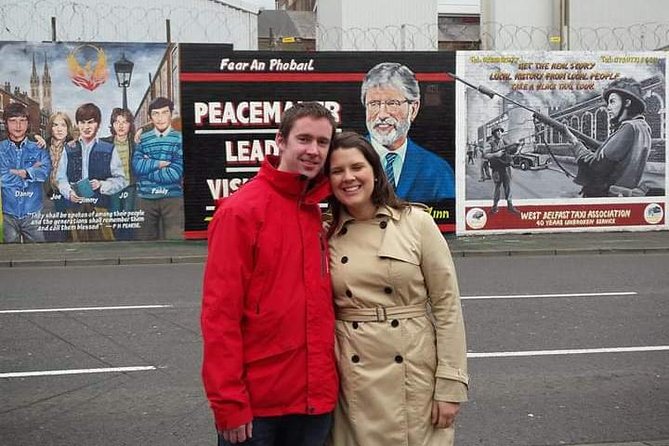
Then you move into the Peace Wall area and the wider Peace Lines concept. The tour focuses on what these barriers look like and why they exist, separating predominantly Republican and Nationalist Catholic neighborhoods from predominantly Loyalist and Unionist Protestant neighborhoods.
This is where the tour becomes more than sightseeing. Peace Lines are not abstract. You are shown that they can reach up to about six meters high, include gates that are locked at night, and sit in the middle of ordinary streets.
A key part of this stop is the opportunity to sign your name and leave a message of peace and hope. That small ritual matters because it pulls the day away from pure facts and into a human response.
Your route includes time connected to the Falls Road and Shankill Road area. The tour also brings you close to major political artwork, including:
- The street art murals on the Falls Road side
- The interface feel of the Shankill Road area
This is likely why the tour gets rave notes for guides who are willing to talk openly. One of the biggest strengths of a good guide here is how they explain what people see every day, without turning it into a lecture you cannot absorb.
Timewise, you have about 30 minutes at each Peace Wall related stop listed, plus additional mural time around nearby points. That gives you a chance to stand, look, and let the meaning sink in.
St Peter’s Cathedral and Clonard Martyrs: faith sites tied to the conflict
From the Peace Lines you move to Catholic landmarks tied to the community’s story.
St Peter’s Cathedral (Divis Street)
St Peter’s Cathedral is the Roman Catholic cathedral church for the Diocese of Down and Connor. Construction began in the 1860s, it opened in 1866, and the twin spires were added in 1886.
Inside and out, your guide can connect the building to the post-Famine Catholic population in Belfast. The cathedral is also noted as home to St Peter’s Schola Cantorum, a choir.
Time is about 20 minutes. It is long enough to appreciate why a cathedral can feel like a community anchor, not just a church.
Bobby Sands mural: hunger strike history in a single frame
Next is a major photo opportunity at the Bobby Sands mural. You will learn about Bobby Sands, leader of the 1981 hunger strike, and the symbolism around him, including the phoenix rising and the chain links imagery.
Your stop is listed at about 10 minutes. That is short, but the guide’s context can turn it from a photo into a timeline.
Clonard Martyrs Memorial Garden
Then you reach Clonard Martyrs, at Bombay Street off Clonard. This is a memorial garden that commemorates fallen volunteers and civilians connected to the wider conflict.
The details matter here: the garden is divided into three yards, with Celtic cross symbolism in the central space and inscriptions linked to names and dates of death. There are also panels remembering civilians and victims.
Your time is about 15 minutes. It is a grounded stop, a pause where the day’s intensity has a specific place to land.
Shankill Road: loyalist heartland and a very different local reality
After Clonard, you shift to Shankill Road, described as the heartland of Ulster loyalism. It runs roughly 2.4 km westward from central Belfast and is known for shops and branching streets where residents live.
The tour framing highlights the interface reality:
- one end of the area is controlled by the UDA
- the other side is controlled by the UVF
Your stop is about 20 minutes. You are not being asked to agree with anyone’s politics. You are being asked to understand how neighborhoods function differently, and how that difference has shaped daily life.
If you want balance, ask your guide how they keep the conversation respectful while still honest. That question alone can steer your whole experience.
Belfast Castle, then back to city landmarks: what “big Belfast” feels like
After the interface history, the tour returns you to more classic Belfast landmarks.
Belfast Castle viewpoint stop
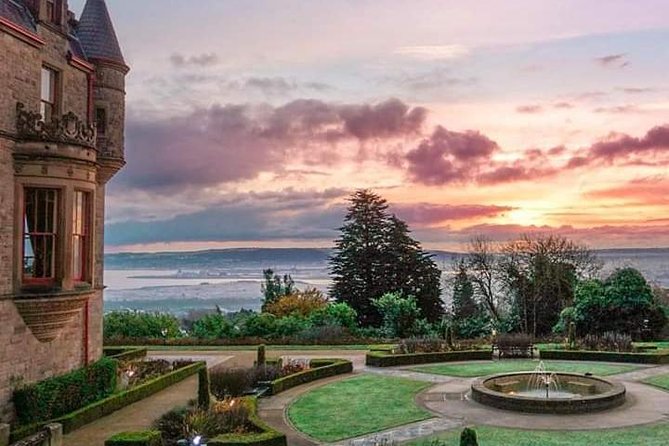
Belfast Castle sits on Cavehill Country Park slopes at about 120 m above sea level, with city and Belfast Lough views. It also has the famous cat garden concept, with nine cat sculptures and mosaics.
Your time at this stop is listed at about 30 minutes, and admission is not included. So treat this as a view and quick appreciation stop unless you decide to pay extra separately.
Time check: this is your first big scenery break of the day, which helps you reset mentally.
Albert Memorial Clock Tower
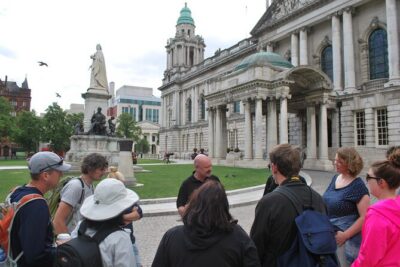
Then you hit the Albert Memorial Clock Tower at Queen’s Square. Completed in 1869, it is one of Belfast’s best known landmarks. It includes a bell and clockworks and has a notable building quirk: because it was built on wooden piles on reclaimed marshy land, it leans slightly and has the old saying about having the time and the inclination.
There is also a 1992 bombing damage history tied to the area.
Your stop is about 10 minutes. It’s short, but it is a good palate cleanser after cathedral and memorial stops.
Big Fish on Donegall Quay
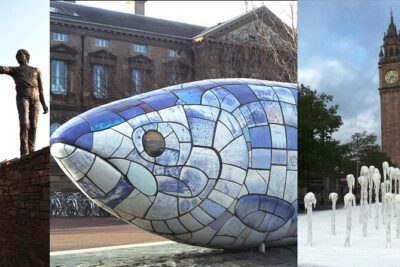
Next is the Big Fish, also called the Salmon of Knowledge. It is a 10 meter ceramic mosaic fish covered in texts and images about Belfast’s history, with contributions from local schools.
It even includes a time capsule, according to Belfast City Council. Your stop is about 10 minutes and functions as a clever, kid-friendly learning moment even if you are traveling solo.
Titanic Quarter without the full museum bill
The route then heads toward the shipbuilding skyline, with a strong emphasis on quick viewing and context.
Samson and Goliath cranes
The twin Harland and Wolff cranes, Samson and Goliath, dominate the skyline. They were built in the late Harland and Wolff shipyard era, not for Titanic, which your guide can clarify since many people assume they were part of Titanic operations.
These cranes are:
- Goliath: about 96 meters
- Samson: about 106 meters
Your stop is about 10 minutes. If you are fascinated by engineering and Belfast’s shipbuilding identity, this is the “wow in passing” moment.
SS Nomadic and Titanic Quarter photo moments
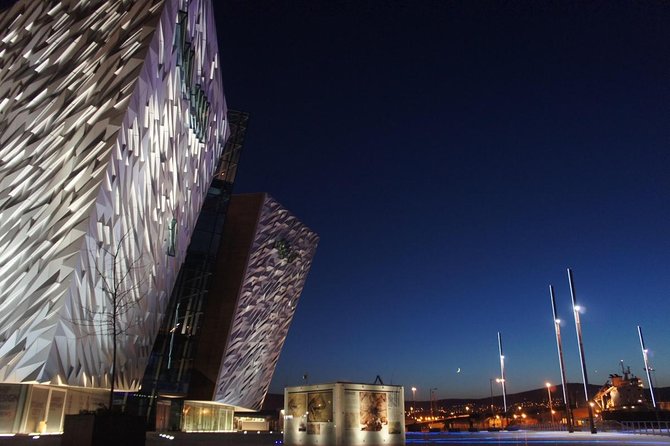
Then you get photo opportunities at SS Nomadic and in the Titanic Quarter. Admission is not included for these photo stops, and Titanic Belfast is also listed as photo opportunity only.
This matters for planning. You still get the setting and the sense of where the city’s maritime stories happened, without forcing you into the biggest attraction on the route.
Your time here is short, about 5 to 10 minutes depending on the stop, so it is ideal if you want to see the area and keep the day moving.
Crown Liquor Saloon ending: a Victorian pub wrap-up
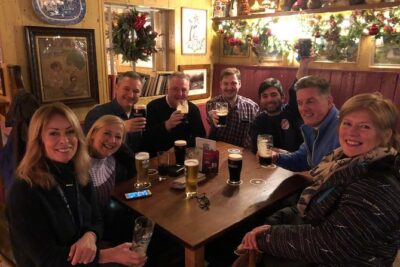
The tour ends at The Crown Liquor Saloon. It is a well known Belfast pub, described as a Victorian gin palace, refurbished in 1885 and at least twice since.
Your stop is about 30 minutes. This is a good way to process the day because after the murals and memorials, you get normal city life back. You can sit, talk with your guide if you still have questions, and de-stress with a drink or food depending on what is available there.
If you are the type who likes closure, this is a strong finish.
A note on walking, safety, and how the guide shapes the tone
This route includes a mix of:
- outdoor street art areas
- memorial gardens
- major civic buildings
- a final pub stop
A good guide keeps transitions smooth and adjusts pacing. One factor worth taking seriously: political history tours are never completely neutral. In a private setting you have more power to steer the conversation. If you want a balanced tone, say so at the start. Ask your guide to explain viewpoints, not just arguments.
Who this private Belfast tour suits best
This tour is best for you if:
- you want to understand Belfast’s history beyond a quick photo run
- you like guided context for the Troubles, murals, and Peace Walls
- you want a short Belfast visit that still covers major neighborhoods
- you prefer private pickup and minimal navigation work
It is less ideal if:
- you want only light sightseeing with no political content
- you hate guided lectures and prefer self-paced wandering
- your group gets uncomfortable with difficult histories
Should you book this private Belfast Explore Like a Local tour?
If you want the Belfast that most guidebooks only summarize, I think this is a strong pick. The mix of Botanic Gardens and Queen’s University, then the Peace Wall and murals route, then the cranes and Titanic Quarter skyline gives you a full city picture in under three hours. Add in private hotel pickup in central Belfast and you get a day that feels planned, not squeezed.
Book it if your main goal is understanding, especially around the Troubles era and the interface streets. Skip it only if you are seeking a purely casual sightseeing day with zero heavy history.
Your Own Group, No One Else
- Private Black Taxi Belfast City Tour
★ 5.0 · 2,188 reviews - 2 Hour Private Belfast Taxi Cab Tour of Troubles & Peace walls
★ 5.0 · 240 reviews - Private Political History & Murals Tour Belfast
★ 5.0 · 182 reviews - Giants Causeway & Antrim Coast Private Tour
★ 5.0 · 176 reviews - Game of Thrones – Private Audi A6 tour with Richard the Wildling
★ 5.0 · 123 reviews
More From the Northern Ireland Pile
- Titanic Belfast Entrance Ticket: Titanic Visitor Experience Including SS Nomadic
★ 4.5 · 3,698 reviews - Cab Tours Belfast Famous Black Taxi Tours
★ 5.0 · 3,633 reviews - A History of Terror – Belfast City Centre Walking Tour
★ 5.0 · 2,883 reviews - Game of Thrones and Giant’s Causeway Full-Day Tour from Belfast
★ 5.0 · 2,291 reviews - Private Black Taxi Belfast City Tour
★ 5.0 · 2,188 reviews
Belfast at Walking Pace
- A History of Terror – Belfast City Centre Walking Tour
★ 5.0 · 2,883 reviews - Belfast Political Tour-Conflicting Stories Walking Tour
★ 4.5 · 459 reviews - Best of Belfast Walking Tour
★ 5.0 · 399 reviews - Belfast Eclectic Walking City Center Experience, The Marti Way
★ 5.0 · 348 reviews - If Buildings Could Talk Tour
★ 5.0 · 230 reviews
More reviews from around the north
- Belfast history of terror & mural 1 hr express private taxi tour★ 5.0 · 3 reviews
- Game of Thrones scene location inc Giants causeway from Belfast★ 5.0 · 3 reviews
- Experience the Antrim Coast and the Land of Giants – Private Tour★ 5.0 · 3 reviews
- Giants Causeway Tour From Belfast including Game of thrones sites★ 5.0 · 3 reviews
- Private Coast Tour in Belfast★ 5.0 · 3 reviews
- Belfast to Dublin Transfer★ 5.0 · 3 reviews
Belfast City Walking Tours, in full.
 ★ 5.0A History of Terror – Belfast City Centre Walking TourFrom $362,883 reviews
 ★ 4.5Belfast Political Tour-Conflicting Stories Walking TourFrom $36459 reviews
 ★ 5.0Best of Belfast Walking TourFrom $36399 reviews
 ★ 5.0Belfast Eclectic Walking City Center Experience, The Marti WayFrom $36348 reviews
 ★ 5.0If Buildings Could Talk TourFrom $20230 reviews
 ★ 5.0Belfast Troubles Murals Street Art and Peace Wall Walking TourFrom $36163 reviews
 ★ 5.0The Real Eclectic Belfast City Walking Tour/Experience.From $30152 reviews
 ★ 5.0The Real Story of Belfast walking tour with a local guideFrom $27144 reviews
Appears in