
REVIEW · BELFAST CITY WALKING TOURS
If Buildings Could Talk Tour
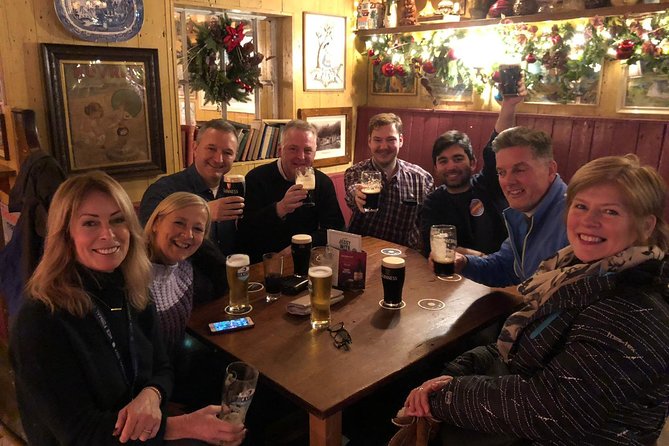
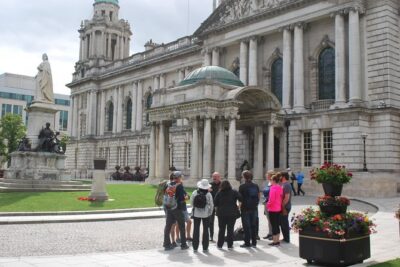
If Buildings Could Talk is a Belfast walking tour that helps you read the city like a storybook, one building and street corner at a time. You cover about 2 miles (3.2 kilometers) on foot, while your guide shares events from roughly the past 100 years, including sights tied to the Troubles. It runs in a small group (up to 20), so the vibe stays friendly and you can ask questions as you go.
I love the storytelling with humor, especially the way guides like Barney turn history into something you can actually follow, not a lecture. I also like the practical setup: a gentle pace, plus headsets and individual booklets reported in the experience, which makes it easier to hear and keep track while you walk.
One consideration: it’s still a 2 hour walk through the city, and the route is weather dependent. If you hate wet pavement or long strolls, plan your day with comfortable shoes and a weather backup in mind.
In This Review
- Key things you’ll notice on this Belfast walking tour
- Entering the City Hall zone, Donegall Square North to start
- Stop by stop, how the tour works in real life
- The route’s big theme: the last 100 years
- Troubles-era murals and why they matter on foot
- What to see and what to ask, so you get your money’s worth
- Barney and Randy: the guides behind the stories
- Price and value: about £12, and what you actually pay for
- Timing it right in your Belfast trip
- Small group comfort: why the format feels personal
- Weather matters, because this is a walk
- Who should book this Belfast tour?
- Should you book If Buildings Could Talk in Belfast?
- FAQ
- Where is the meeting point for the tour?
- How long is the tour and how far do you walk?
- What is included in the price?
- How big is the group?
- Does the tour run in bad weather?
- Are service animals allowed?
Key things you’ll notice on this Belfast walking tour
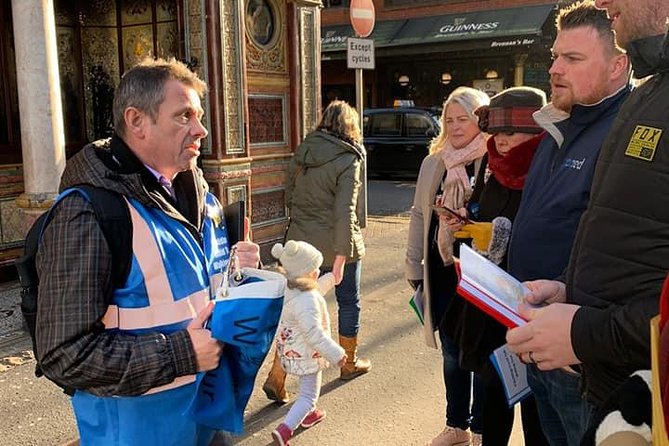
- Two different departures each day: 10am and 1pm from the City Hall area
- About 2 miles total for a roughly 2 hour tour, so it is easy to fit in
- Up to 20 people max, which keeps questions flowing
- Stories focused on the last 100 years, with unusual and entertaining local moments
- Troubles-era sights, including murals connected to that period
- Barney’s style (and sometimes Randy’s), combining facts, pacing, and humor
Other Belfast walks worth the shoe leather
Entering the City Hall zone, Donegall Square North to start

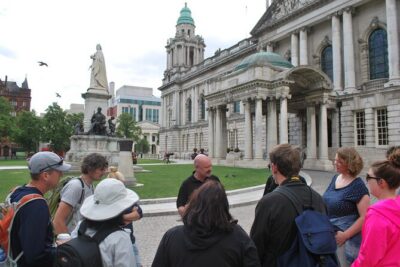
The tour starts at Donegall Square North in Belfast, and it loops back to the same spot when you finish. Your handiest landmark is the City Hall area, because the day’s departures run at 10am and 1pm from the right-hand side of City Hall, opposite the Danske Bank.
This matters for first-timers. Belfast’s center is walkable, but it is not always obvious where you are relative to everything you want to see. Getting a guided “base map” early helps you later when you switch from listening mode to exploring mode.
The meeting points listed include Donegall Square North, with a ticket redemption point at 9 Donegall Square N. So even if your navigation app drops you a few blocks away, you have a clear street address to reorient.
Stop by stop, how the tour works in real life
There is one core walking stop in the structure, but it’s really a sequence along Belfast’s city centre. You’ll spend about 1 hour 45 minutes to 2 hours on the walk, and the exact timing can flex with the group size.
The guide’s job is to connect the physical city to human events. So instead of only pointing out what a building looks like, you’ll hear what happened around it, who used it, and why it mattered. That is the heart of a tour like this, because buildings are the loudest “memory” a place has.
Expect frequent moments where you slow down, look, and listen. You’ll pick up small details you might otherwise miss, like visual cues on walls, how certain areas developed, and how the city’s changes show up on street level.
The route’s big theme: the last 100 years
This is where the tour earns its name. You’re not just hearing a few famous highlights. You get stories stretching back around a century, which helps you understand why Belfast looks the way it does today.
I like this approach because it matches how real cities change. You can’t understand a modern street without some context for the conflicts, rebuilds, and everyday life that shaped it. Here, that context is delivered at walking speed, with enough detail to be useful and enough humor to keep it from feeling heavy.
- Titanic Belfast Entrance Ticket: Titanic Visitor Experience Including SS Nomadic
★ 4.5 · 3,698 reviews




Troubles-era murals and why they matter on foot
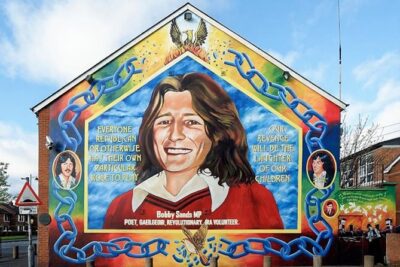
One of the most meaningful parts is seeing sights tied to the Troubles, including murals connected with that period. These murals are more than decoration. They often function as public memory, protest, storytelling, and identity, all at once.
On a walking tour, you get an advantage: you can see murals where they sit in the street grid, not just in a photo. That makes it easier to understand how neighborhoods overlap, how communities mark meaning, and how the past stays visible.
The key for you: don’t rush past. When your guide points something out, pause and look. That extra minute is what turns a passing view into understanding.
What to see and what to ask, so you get your money’s worth

This tour is designed for conversation, not just listening. With a small group (up to 20 travelers), you can usually ask follow-up questions without the guide having to keep moving at lightning speed.
I’d go in with at least one question ready, even if it is simple. For example: What’s the difference between what you see in front of you and what happened here decades ago? Or, what should I notice as I keep walking after the tour ends?
The reviews you can use as guidance point to a consistent pattern: guests found the tour entertaining, factual, and built around the guide’s ability to answer questions patiently. That combination is important. A history tour that cannot handle your questions becomes frustrating fast. Here, the format works better than the “whistle through the streets” style.
If you like a bit of comedy, you will likely appreciate the guide approach. Barney in particular is repeatedly described as weaving humor into stories, with a pace that feels easy on the feet.
Barney and Randy: the guides behind the stories
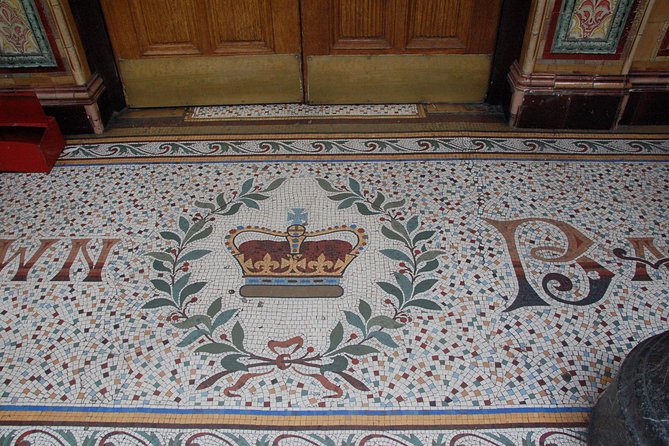
A standout detail from the experience is the guide talent. Barney is the name most commonly associated with the tour, and the feedback on his approach is very consistent: engaging stories, local detail, and a humor touch that keeps the history from feeling stiff.
In one review, Randy is also mentioned as a fabulous guide, with deep knowledge and patience with questions. Even without assuming every guide has the same style, the overall evidence suggests the provider trains guides to be more than narrators. They act like friendly local historians who can also help you make sense of what you are looking at.
Here is how to use that to your advantage. If you spot a building or mural that looks like it has a story, ask about it. Most guides with this style will connect your question back to what’s happening across the route, so you leave with a tighter mental map.
Price and value: about £12, and what you actually pay for
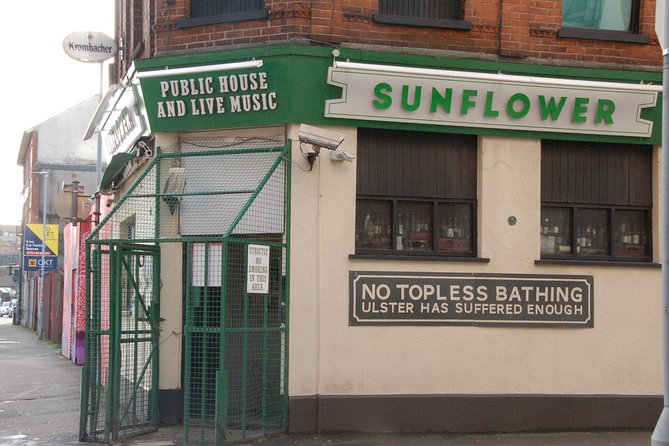
Pricing is listed as about $20.80 per person, and also as £12 for the tour. That makes sense because exchange rates move, but either way, this is in the “good value” category for a two hour walking experience with a live guide.
The tour includes the guide, and the admission is listed as free. Practically, that means you are paying for interpretation, not museum tickets. If you enjoy learning from the street itself, this is exactly the kind of cost structure that works.
I also like that the walk is short enough to be low-friction. Two hours is not a full-day commitment, and about 2 miles is manageable for many people with decent footwear. So even if you only have part of a day, this can still be your anchor activity.
Timing it right in your Belfast trip
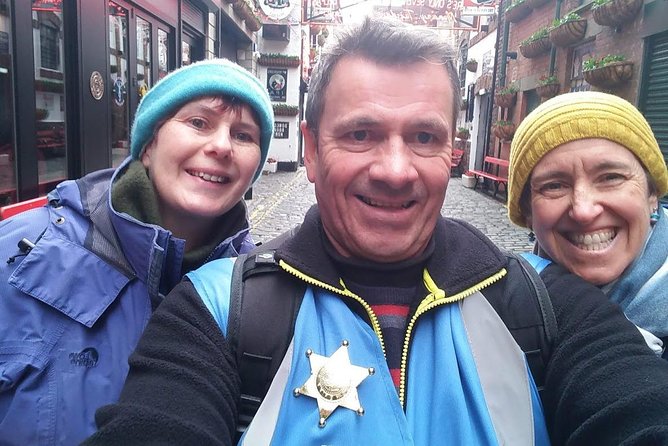
This is the kind of tour I’d schedule early. If you take it near the start of your trip, you get references that help you later when you visit Belfast on your own. Instead of walking by buildings like they are background, you know what they represent.
Also, because there are two departures daily at 10am and 1pm, you can choose timing that fits your energy. If you like a slower start, the 10am tour is great. If you want to sleep in, the 1pm option keeps you from rushing.
One practical tip: plan a bit of flexible time before and after. Even though the tour is close to 2 hours, walking tours rarely feel like clockwork. Your best experience comes when you do not have to sprint to the next plan.
Small group comfort: why the format feels personal
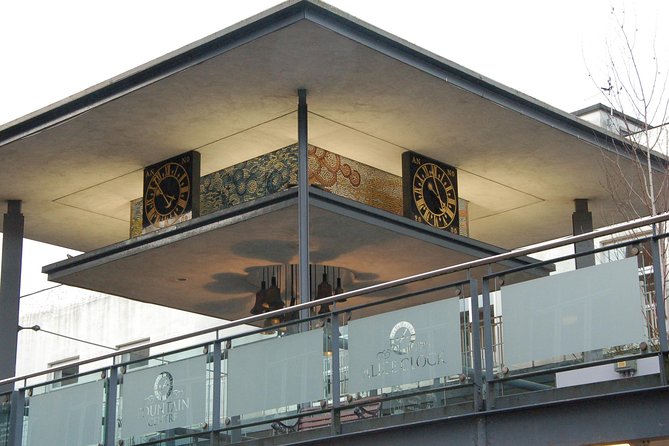
With a max group size of 20 travelers, you are not stuck with the “herded group” feeling. That is a big deal for a tour that depends on hearing fine details, because a more spread-out group makes it easier for the guide to pace the conversation.
Headsets and booklets were mentioned in the experience, and that is a practical win. If you have trouble hearing on noisy streets, headsets can be the difference between catching the story and missing key parts. Booklets give you something to hold onto while you walk, which can be helpful if you like to review later while planning the next day.
The pace is described as gentle in feedback. That matters because Belfast center has its own rhythm, and a tight pace can turn history into stress. Here, you get more time to look and think.
Weather matters, because this is a walk
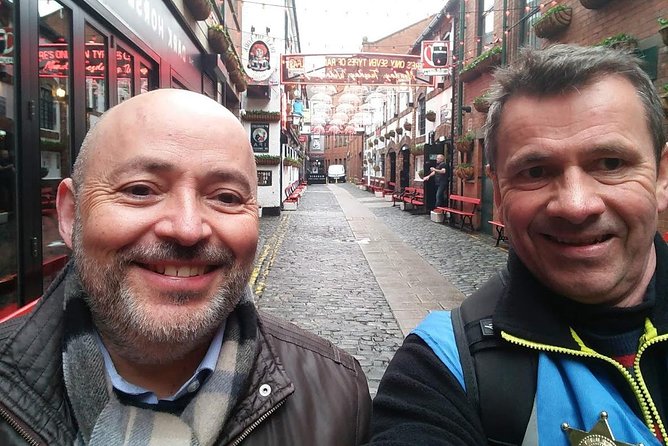
The experience requires good weather. If it is canceled due to poor weather, you’ll be offered a different date or a full refund.
That tells you how to pack. Wear comfortable shoes. Bring layers you can adjust quickly. If rain threatens, have a simple plan: keep a light rain jacket handy, and do not let one cloudy afternoon ruin your whole itinerary.
If you end up taking the tour in good weather, the payoff is bigger. You’ll enjoy seeing murals and street-level details without the damp distraction of cold wind and slippery sidewalks.
Who should book this Belfast tour?
This tour fits best if you want:
- a Belfast city centre introduction without spending the whole day inside
- a guided way to understand how the city shifted over roughly the past 100 years
- stories that connect buildings, people, and what you see on the street today
- a small-group setting where questions are welcome
It is also a smart pick if you are local. Reviews describe it as valuable even for people from close to Belfast, which is often the best sign for a tour like this. The city tour with a twist usually works hardest when it teaches you something you would not normally notice.
That said, it might be less ideal if you hate walking or you want a ticket-based attraction. This is street-level learning. You are not going to be waiting in lines for indoor sights. The value comes from the guide and what you notice as you go.
Should you book If Buildings Could Talk in Belfast?
Yes, if you want a fast, human way to understand Belfast’s story through what still stands. The combination of a small group, roughly 2 miles of walking, and guides like Barney who blend facts with humor makes it a strong first-timer choice. It is also good for locals who want a different lens on familiar streets.
I would only skip it if your day is tight, your feet are not up for 2 hours, or you are looking for an indoor museum-style schedule. Otherwise, this is one of those rare city activities that makes later self-guided exploring feel easier.
FAQ
Where is the meeting point for the tour?
The tour meets at Donegall Square North in Belfast (BT1 1, UK). The meeting point is listed as Donegall Square North, Belfast BT1, and it also notes a ticket redemption point at 9 Donegall Square N, Belfast BT1 5GJ.
How long is the tour and how far do you walk?
The tour lasts about 2 hours, with the walk described as roughly 2 miles in total (about 3.2 kilometers). The exact time can run between 1 hour 45 minutes and 2 hours depending on group size.
What is included in the price?
The tour includes the tour guide. Admission is listed as free, so you are mainly paying for the guided experience rather than entry fees to attractions.
How big is the group?
This experience has a maximum of 20 travelers. That small group size is part of what makes it easier to ask questions during the walk.
Does the tour run in bad weather?
The experience requires good weather. If it is canceled due to poor weather, you will be offered a different date or a full refund.
Are service animals allowed?
Yes, service animals are allowed on this tour.
Other Tours We Have Been On
- Cab Tours Belfast Famous Black Taxi Tours
★ 5.0 · 3,633 reviews - A History of Terror – Belfast City Centre Walking Tour
★ 5.0 · 2,883 reviews - Game of Thrones and Giant’s Causeway Full-Day Tour from Belfast
★ 5.0 · 2,291 reviews - Private Black Taxi Belfast City Tour
★ 5.0 · 2,188 reviews - City Sightseeing Belfast Hop-On Hop-Off Bus Tour
★ 4.5 · 2,012 reviews
More From the Northern Ireland Pile
- Titanic Belfast Entrance Ticket: Titanic Visitor Experience Including SS Nomadic
★ 4.5 · 3,698 reviews - Cab Tours Belfast Famous Black Taxi Tours
★ 5.0 · 3,633 reviews - A History of Terror – Belfast City Centre Walking Tour
★ 5.0 · 2,883 reviews - Game of Thrones and Giant’s Causeway Full-Day Tour from Belfast
★ 5.0 · 2,291 reviews - Private Black Taxi Belfast City Tour
★ 5.0 · 2,188 reviews
Belfast at Walking Pace
- A History of Terror – Belfast City Centre Walking Tour
★ 5.0 · 2,883 reviews - Belfast Political Tour-Conflicting Stories Walking Tour
★ 4.5 · 459 reviews - Best of Belfast Walking Tour
★ 5.0 · 399 reviews - Belfast Eclectic Walking City Center Experience, The Marti Way
★ 5.0 · 348 reviews - Belfast Troubles Murals Street Art and Peace Wall Walking Tour
★ 5.0 · 163 reviews
More reviews from around the north
- Belfast history of terror & mural 1 hr express private taxi tour★ 5.0 · 3 reviews
- Game of Thrones scene location inc Giants causeway from Belfast★ 5.0 · 3 reviews
- Experience the Antrim Coast and the Land of Giants – Private Tour★ 5.0 · 3 reviews
- Giants Causeway Tour From Belfast including Game of thrones sites★ 5.0 · 3 reviews
- Private Coast Tour in Belfast★ 5.0 · 3 reviews
- Belfast to Dublin Transfer★ 5.0 · 3 reviews
Belfast City Walking Tours, in full.
 ★ 5.0A History of Terror – Belfast City Centre Walking TourFrom $362,883 reviews
 ★ 4.5Belfast Political Tour-Conflicting Stories Walking TourFrom $36459 reviews
 ★ 5.0Best of Belfast Walking TourFrom $36399 reviews
 ★ 5.0Belfast Eclectic Walking City Center Experience, The Marti WayFrom $36348 reviews
 ★ 5.0Belfast Troubles Murals Street Art and Peace Wall Walking TourFrom $36163 reviews
 ★ 5.0The Real Eclectic Belfast City Walking Tour/Experience.From $30152 reviews
 ★ 5.0The Real Story of Belfast walking tour with a local guideFrom $27144 reviews
 ★ 4.5Belfast Music and Street Art Small Group Guided ExperienceFrom $3062 reviews
Appears in