
REVIEW · BELFAST CITY WALKING TOURS
Best of Belfast Walking Tour
Belfast makes more sense when you walk it. This 3-hour city-center tour pairs major landmarks with story-driven history, helped along by easy-to-hear headsets. Guides like Mark, Jim, Colin, Paul, and Steve are known for turning a schedule of stops into a clear picture of how Belfast grew.
I especially like the way the route mixes politics and everyday places, so you see the city as it is now, not just a set of monuments. You also get practical local pointers along the way, including bar and food recommendations shared during the walk.
The one drawback to plan for is simple: it is a walking tour. Even with a moderate pace, you will cover a fair amount of ground, so comfortable shoes matter, and it may not suit mobility limitations.
In This Review
- Key highlights to look for
- Why this Belfast walk is a smart first-day move
- Price and what you really get for $36.05
- Meeting spot, timing, and how the walk fits your day
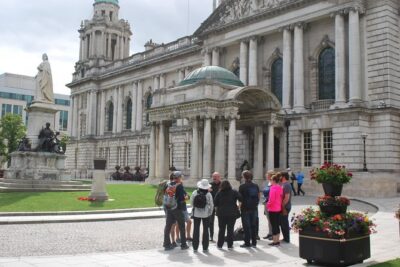
- Stop 1: Belfast City Hall, where the story begins
- Stop 2: St Mary’s Roman Catholic Church and its grotto
- Stop 3: Belfast Cathedral (St Anne’s), and the United Irishmen
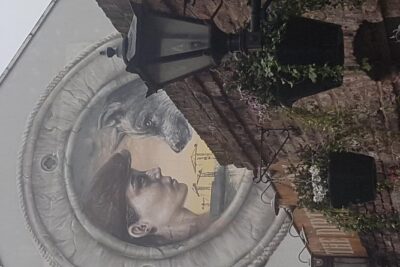
- Stop 4: Cathedral Quarter streets, street art, and punk under pressure
- Stop 5: Customs House, Speaker’s Corner, and an old pub nearby
- Stop 6: Big Fish by the Lagan, plus Titanic cranes and art
- Stop 7: Albert Memorial Clock Tower, the lean explained, and why Belfast got its name
- Stop 8: The Belfast Entries, an outdoor art gallery you can walk through
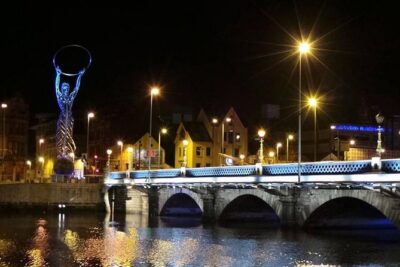
- Stop 9: Spirit of Belfast in the pedestrian precinct
- Stop 10: Titanic Memorial Garden, City Hall again, and a strong wrap-up
- What to ask your guide so you get more value
- Who should book this tour (and who might pass)
- Should you book the Best of Belfast Walking Tour?
- FAQ
- How long is the Best of Belfast Walking Tour?
- Where does the tour start, and where does it end?
- What time does the tour start?
- Is the tour offered in English?
- Are headsets provided to hear the guide?
- How many people are in a group?
- Is the walking pace suitable for most people?
- What happens if the weather is bad?
- Are service animals allowed?
- How much does the tour cost?
Key highlights to look for
- Licensed local guide telling the full Belfast story, not just dates and names
- Headsets included so you can actually hear the guide outdoors
- City Hall start and finish, making it easy to plug into the rest of your day
- A route through Belfast’s signature areas, from City Hall to the Titanic Memorial Garden
- Public art stops in the Belfast Entries and the pedestrian precinct that are more fun than they sound
- A coffee or restroom break around halfway, which keeps the pace comfortable
Other Belfast walks worth the shoe leather
Why this Belfast walk is a smart first-day move
If this is your first time in Belfast, this tour is built for that moment when you need orientation fast. You start in the civic heart at Belfast City Hall, then you move outward through the city center’s major quarters. By the time you reach the Titanic Memorial Garden, you have a mental map of where key chapters happened, and where the city’s energy shows up today.
What makes it work is the blend of tones. You will hear about the city’s political and social history, including stories tied to the Troubles, but you are also shown streets, churches, art, and famous landmarks. That matters because Belfast can feel complicated at first. Walking and listening together helps you connect the dots without feeling like you are cramming.
Also, the guides have a friendly, story-forward style. You are not just getting facts, you are getting explanations, plus real-life tips about what to do next after the tour. That last part is underrated, because it saves you time and guessing.
Price and what you really get for $36.05
At $36.05 per person for about 3 hours, this is the kind of tour that is worth it when you want maximum value per hour. The biggest reason is the setup: headsets are included, and the group stays small enough to feel guided rather than crowded.
The stops also list free admission, which helps keep the tour budget predictable. You are not paying extra to see the highlights on the route, and you get help understanding what you are looking at while you are standing in front of it.
Finally, the tour is offered in English and uses a local guide. That combination matters in Belfast, where small details can change the meaning of what you see. The guide’s job is to connect those details into something you can carry around in your head later.
Meeting spot, timing, and how the walk fits your day
You meet at the front gates of Belfast City Hall at Donegall Square N, Belfast BT1 5GS, and the tour starts at 10:00 am. It ends back at the same meeting point, so you do not have to figure out transportation or reroute plans at the end.
The tour is designed to run in all weather conditions, so you should dress for rain or cool wind, especially near the river. One practical takeaway from the experience style is that it keeps a steady rhythm. People describe it as a lot of walking, but with a pace that stays easy to maintain.
One more tip: plan your morning so you have time for a break. Guides typically build in a coffee or restroom pause around the halfway point, which makes the last stretch feel much less like a slog. If you hate walking on an empty stomach, this is one of the reasons the tour feels easy to recommend.
More done on foot, at walking pace



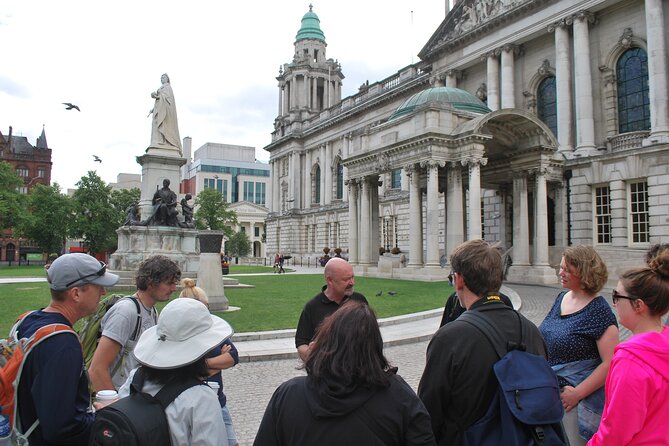
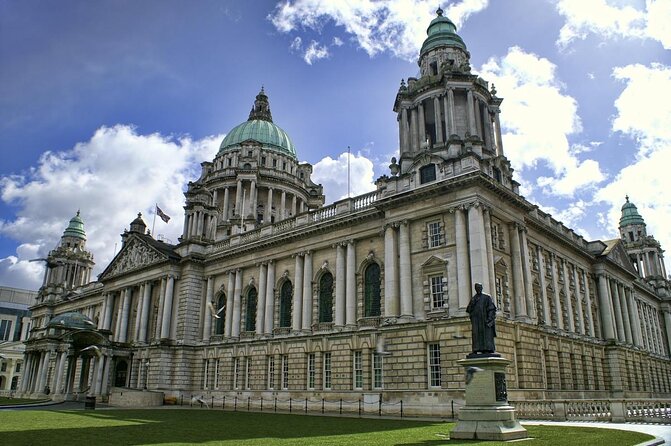
Stop 1: Belfast City Hall, where the story begins
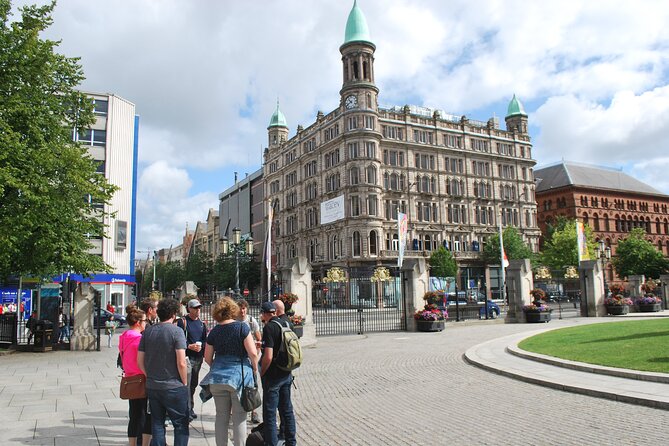
The tour kicks off at Belfast City Hall, and that first stop matters. It gives you the baseline for the city, so later places make more sense. Expect an introduction that sets context and helps you understand what you will be hearing about as you move through the center.
This start point is also convenient. City Hall is central, easy to find, and a good anchor if you are also visiting museums, shopping, or heading to an afternoon attraction.
Stop 2: St Mary’s Roman Catholic Church and its grotto
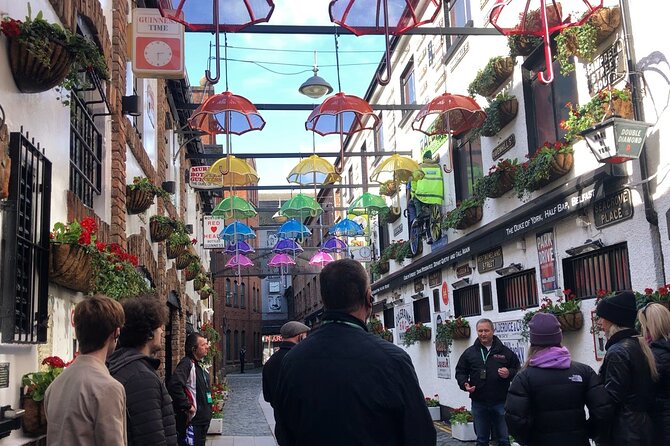
From Bank Square, you shift into the layers of Belfast’s older streets and religious landmarks. St Mary’s Roman Catholic Church is part of the story, including its unique grotto. You also hear about the original Belfast Castle that once stood nearby.
This is one of those moments where a guide helps you see beyond the obvious. Churches and old sites can feel like scenery if you do not know what to look for. Here, you get the context that turns the building into a clue about Belfast’s timeline.
Stop 3: Belfast Cathedral (St Anne’s), and the United Irishmen
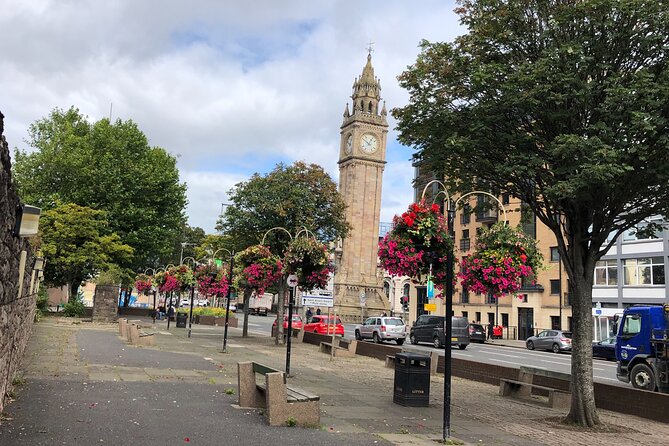
As you walk toward the Cathedral Quarter, you visit Belfast Cathedral, the Cathedral Church of St Anne. The guide focuses on stories tied to the United Irishmen and their contributions to the city’s development.
This stop works well for two reasons. First, it gives political history a human scale, so you hear names and motivations instead of just slogans. Second, the Cathedral Quarter location helps you feel the geography, because the area around the cathedral has its own vibe and identity compared to the civic core.
Stop 4: Cathedral Quarter streets, street art, and punk under pressure
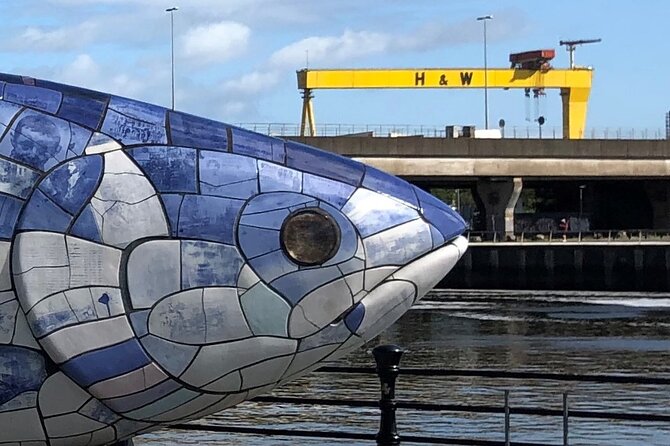
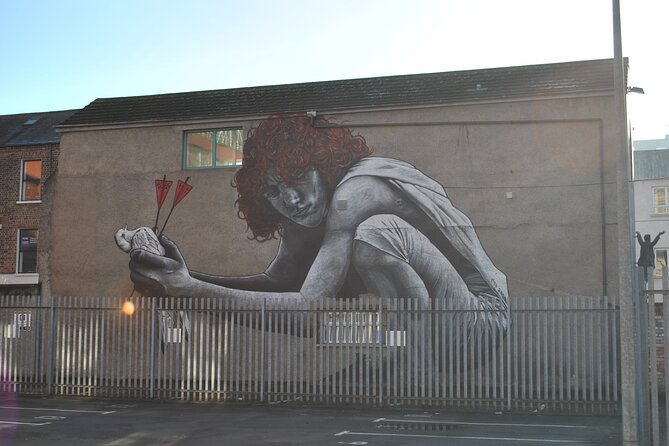
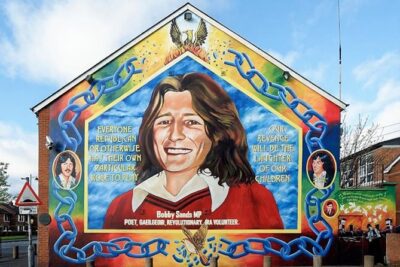
Next up is the Cathedral Quarter and Hill Street, described as one of Belfast’s last cobbled streets. This is where the tour gets more playful. You will see some of Belfast’s best street art, and you will get recommendations for bars, restaurants, and nightspots.
The guide also talks about punk in Belfast and why it mattered during the era of the Troubles. That pairing is smart. Punk is not just music history here, it becomes a lens for how people expressed themselves when politics felt suffocating.
If you like street-level Belfast, this is a strong stop. It breaks up the heavier history and gives you a sense of creative life in the city.
Stop 5: Customs House, Speaker’s Corner, and an old pub nearby
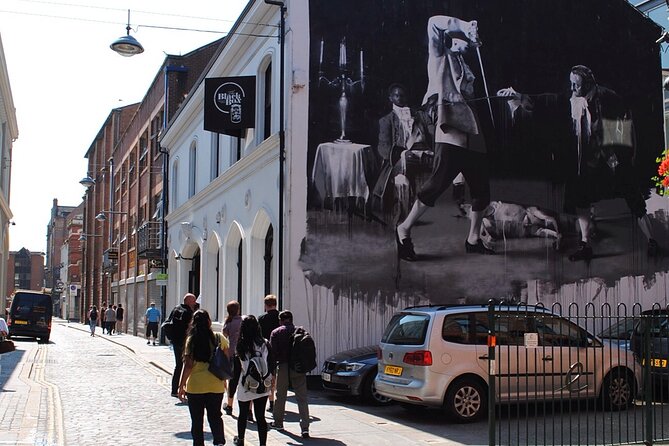
At the Customs House, you get one of the city’s most interesting civic contradictions: the building’s role in public speech. You hear stories tied to Speaker’s Corner, including the kinds of orators who stood there.
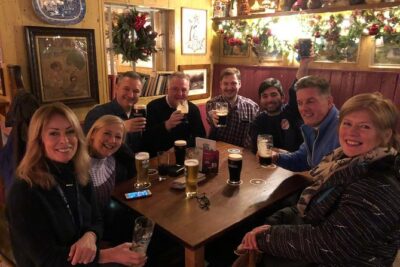
You also get a thread to the old pub culture in the area, including mention of one of the oldest pubs in Belfast still standing nearby. Even if you do not stop for a drink during the tour, you leave with a good reason to.
This stop is a good example of why a guide helps. Without context, Customs House can feel like architecture. With context, it becomes part of Belfast’s argument history.
Stop 6: Big Fish by the Lagan, plus Titanic cranes and art
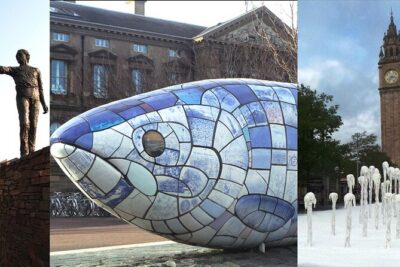
Walking along the river Lagan, you reach Big Fish and the view across to Harland and Wolff shipyard and its yellow cranes. This is Titanic territory, and the tour connects it to Belfast’s shipbuilding legacy.
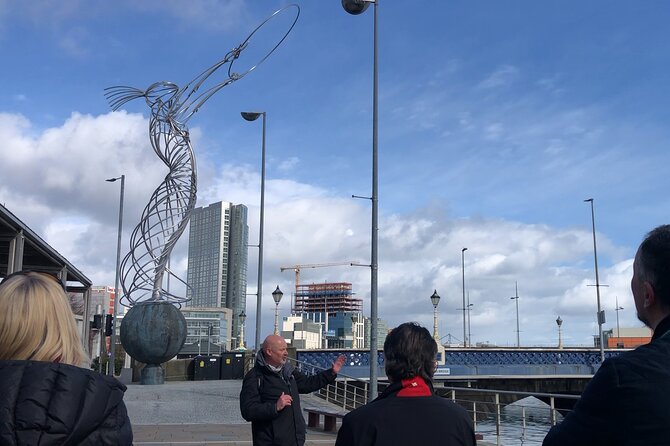
You also hear the legend behind the sculpture the Salmon of Knowledge. Then you visit the guide’s favorite piece of public art, the Beacon of Hope, which symbolizes resilience and regeneration in recent years.
This stop is one of the tour’s best for emotional balance. The Titanic story can be awe-inducing on its own, but the addition of hope-themed public art makes the ending feel more grounded. It is not all past conflict.
Stop 7: Albert Memorial Clock Tower, the lean explained, and why Belfast got its name
Albert Memorial Clock Tower is another place where a guide turns a tourist photo into an actual story. You hear why the tower is angled, and you learn how Belfast got its name.
There is also mention of a footballer’s favorite pub in the area, which is the kind of detail that turns into a practical recommendation later. Even if you are not a football fan, it is a helpful nudge toward local spots.
Think of this stop as your final “anchoring point” before the tour turns deeper into the older street fabric of the city.
Stop 8: The Belfast Entries, an outdoor art gallery you can walk through
The Belfast Entries are at the heart of the oldest part of the city. Today, they are transformed into an outdoor art gallery, with dozens of pieces, each with its own story.
This is a great stop for slow looking. The tour pace gives you time to pause and read what the art is saying, then the guide fills in the history behind the area and the people who lived there over the centuries.
If you like photography, this is also where you will get more variety than you expected. The lanes feel intimate, and the art changes what you think you will see in Belfast.
Stop 9: Spirit of Belfast in the pedestrian precinct
In the pedestrian heart of the city, you look at the meaning behind some of Belfast’s quirkiest public art, including its alternative name. The surrounding historic buildings also get attention, with stories that connect the art to older place histories.
This stop is short on paper, but it can be memorable because it invites you to look at Belfast like a living collage, not a museum. You will probably walk away thinking about what public art says about identity, even when it looks playful.
Stop 10: Titanic Memorial Garden, City Hall again, and a strong wrap-up
The tour ends back near Belfast City Hall, at the Titanic Memorial Garden. You hear the story of the ship and some of the people who sailed on it, then you finish with tales of famous citizens whose statues are found in the grounds.
This ending works well because you return to the civic starting point with a new frame of reference. You begin with Belfast as a city, and you end with Belfast as a force in the world, tied to the Titanic legacy and the city’s modern identity.
It is a satisfying loop: start with the baseline, cross the river and the shipyard story, then land back where you can plan the next step.
What to ask your guide so you get more value
This tour is the kind where you can squeeze extra usefulness out of every stop by asking smart questions. If your guide is Mark, Jim, Colin, Paul, Steve, Chris, or James, you are likely to get clear answers plus practical suggestions.
Here are questions that match what the guides seem prepared for:
- Where should I go next for food after this?
- Which nearby streets are worth walking even if it is raining?
- What should I watch for if I visit the Titanic-related sights later?
- If I only have one more evening in Belfast, where should I spend it?
Because headsets are included, you can ask questions without shouting. That keeps the experience smooth and respectful, even in outdoor areas.
Who should book this tour (and who might pass)
This tour is ideal if you want a first-time orientation plus history that explains why the city looks the way it does. It is also a strong choice if you like a guide who can balance big events with everyday places, so you get a fuller sense of Belfast’s character.
It may be less ideal if you cannot do a walking-heavy outing. The tour is described as a moderate pace, but it still lasts about three hours and covers multiple stops. If mobility is a concern, you may want to look for a shorter or less walking-focused alternative.
Should you book the Best of Belfast Walking Tour?
Yes, I think you should book it if you want the best kind of Belfast overview: guided, hear-it-out-loud history, organized around the city’s most recognizable spots, with headsets that make outdoor listening actually work. The price feels fair for the time, the local guide quality, and the built-in rest rhythm.
Book it especially if you are the type who likes to understand context before you start exploring on your own. You will finish the walk with a clearer mental map and better choices for where to go next, not just a pile of memorized facts.
FAQ
How long is the Best of Belfast Walking Tour?
It runs for about 3 hours.
Where does the tour start, and where does it end?
It starts at Belfast City Hall, Donegall Square N, Belfast BT1 5GS, UK. The tour ends back at the meeting point.
What time does the tour start?
The listed start time is 10:00 am.
Is the tour offered in English?
Yes, it is offered in English.
Are headsets provided to hear the guide?
Yes. Headsets are included so it is easier to hear the guide outdoors.
How many people are in a group?
The tour has a maximum of 25 travelers.
Is the walking pace suitable for most people?
Most travelers can participate, and the pace is described as easy to maintain. Still, it is a walking tour and you should wear comfortable shoes.
What happens if the weather is bad?
The tour requires good weather, and if it is canceled due to poor weather you will be offered a different date or a full refund. It also notes it operates in all weather conditions, so dress appropriately.
Are service animals allowed?
Yes, service animals are allowed.
How much does the tour cost?
The price is $36.05 per person.
Other Tours We Have Been On
- Cab Tours Belfast Famous Black Taxi Tours
★ 5.0 · 3,633 reviews - A History of Terror – Belfast City Centre Walking Tour
★ 5.0 · 2,883 reviews - Game of Thrones and Giant’s Causeway Full-Day Tour from Belfast
★ 5.0 · 2,291 reviews - Private Black Taxi Belfast City Tour
★ 5.0 · 2,188 reviews - City Sightseeing Belfast Hop-On Hop-Off Bus Tour
★ 4.5 · 2,012 reviews
More From the Northern Ireland Pile
- Titanic Belfast Entrance Ticket: Titanic Visitor Experience Including SS Nomadic
★ 4.5 · 3,698 reviews - Cab Tours Belfast Famous Black Taxi Tours
★ 5.0 · 3,633 reviews - A History of Terror – Belfast City Centre Walking Tour
★ 5.0 · 2,883 reviews - Game of Thrones and Giant’s Causeway Full-Day Tour from Belfast
★ 5.0 · 2,291 reviews - Private Black Taxi Belfast City Tour
★ 5.0 · 2,188 reviews
Belfast at Walking Pace
- A History of Terror – Belfast City Centre Walking Tour
★ 5.0 · 2,883 reviews - Belfast Political Tour-Conflicting Stories Walking Tour
★ 4.5 · 459 reviews - Belfast Eclectic Walking City Center Experience, The Marti Way
★ 5.0 · 348 reviews - If Buildings Could Talk Tour
★ 5.0 · 230 reviews - Belfast Troubles Murals Street Art and Peace Wall Walking Tour
★ 5.0 · 163 reviews
More reviews from around the north
- Belfast history of terror & mural 1 hr express private taxi tour★ 5.0 · 3 reviews
- Game of Thrones scene location inc Giants causeway from Belfast★ 5.0 · 3 reviews
- Experience the Antrim Coast and the Land of Giants – Private Tour★ 5.0 · 3 reviews
- Giants Causeway Tour From Belfast including Game of thrones sites★ 5.0 · 3 reviews
- Private Coast Tour in Belfast★ 5.0 · 3 reviews
- Belfast to Dublin Transfer★ 5.0 · 3 reviews
Belfast City Walking Tours, in full.
 ★ 5.0A History of Terror – Belfast City Centre Walking TourFrom $362,883 reviews
 ★ 4.5Belfast Political Tour-Conflicting Stories Walking TourFrom $36459 reviews
 ★ 5.0Belfast Eclectic Walking City Center Experience, The Marti WayFrom $36348 reviews
 ★ 5.0If Buildings Could Talk TourFrom $20230 reviews
 ★ 5.0Belfast Troubles Murals Street Art and Peace Wall Walking TourFrom $36163 reviews
 ★ 5.0The Real Eclectic Belfast City Walking Tour/Experience.From $30152 reviews
 ★ 5.0The Real Story of Belfast walking tour with a local guideFrom $27144 reviews
 ★ 4.5Belfast Music and Street Art Small Group Guided ExperienceFrom $3062 reviews