
REVIEW · TROUBLES HISTORY & PEACE PROCESS TOURS
IRA Troubles Conflict Private Tour Museum Graves Murals and Political Analysis
Belfast divides even when you stop walking. This private, 3-hour ride through the city focuses on Irish Republican history, with time to ask questions and a guide who ties street scenes to the bigger political picture, from the Troubles to today. You also get access to a private history museum that is usually not open to the public.
I especially love how the tour makes the conflict visible in everyday places: the political murals around the Falls Road and Shankill Road, plus the chance to visit a Peace Wall up close on both sides, including writing your name and a short message of peace. And then it turns personal at Milltown Cemetery, where Bobby Sands’ story is grounded in a real burial site rather than a screen or a book.
The main drawback is also the point: this is an Irish Republican perspective, so if you want a fully even split of Loyalist and Republican arguments, you may feel the angle is one-sided. Also, the sites are emotional, including memorials tied to violence and imprisonment, so go with a steady pace and an open mind.
In This Review
- Key highlights you’ll actually feel
- Why Belfast still feels split in real life
- Private transport plus a guide who can answer the hard questions
- Divis Street to the Falls Road murals, from a Republican viewpoint
- Peace Walls up close, then a message of peace you can write
- Shankill Road murals, Loyalist heartland, and the politics of who controls streets
- Clonard Martyrs memorial garden and the monastery’s role
- Milltown Cemetery: Bobby Sands, Red Hand markers, and why hunger strikes mattered
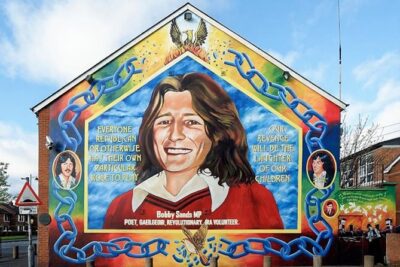
- Bobby Sands murals and D Company, plus the museum built for questions
- Divis Tower, Ballymurphy Road, and the Peace Wall loop for context
- Price, time, and what you’re really getting for $255.50
- Who this tour fits best, and who should choose something else
- Should you book this Belfast Troubles private tour?
- FAQ
- How long is the tour in Belfast?
- Is pickup included, and where does it start?
- What language is the tour offered in?
- When is the Irish Republican History Museum open?
- What is included during the tour?
- Can I get a full refund if I cancel?
Key highlights you’ll actually feel
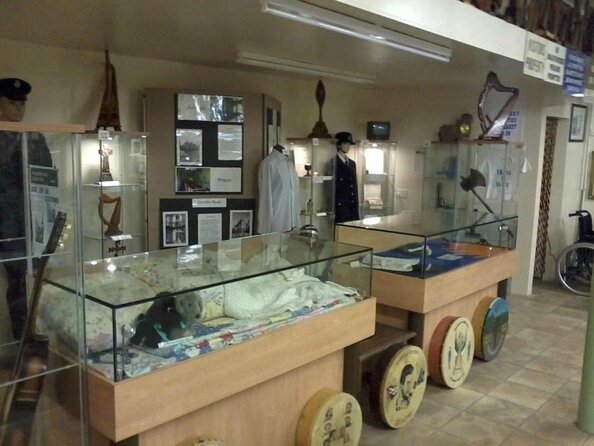
- Private museum access plus encounters with ex-prisoners of war who share firsthand experience
- Peace Walls on the ground, including signing your name and writing a peace message
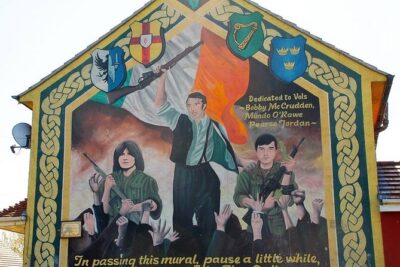
- Murals with meaning, including work linked to ex-prisoners and community political storytelling
- Milltown Cemetery and Republican plots, marked with the Red Hand, including Bobby Sands’ resting place
- Hands-on details like seeing and handling plastic and rubber bullets used by Crown forces
- A tight 3-hour schedule that hits murals, memorial gardens, and key interface areas fast
Other Troubles history tours, reviewed the same way
Why Belfast still feels split in real life
The Troubles may be decades behind us, but Belfast’s geography still talks. You can feel it in the way neighborhoods run into each other, then stop being neighbors and become checkpoints, barriers, and “interface” zones where tension never fully disappeared.
This tour is built for that reality. Instead of treating the past like museum glass, you’re moving through the places where murals, walls, and memorial gardens keep the story in view. You’re not just seeing history, you’re seeing how people live with it.
And because it’s private, you can ask follow-up questions without worrying about keeping a group moving. Guides named in past tours, like Barry, Joe, Paula, and Ciarán, are described as bringing personal Belfast context into the conversation, which helps the facts land.
Private transport plus a guide who can answer the hard questions
You ride in an air-conditioned vehicle with a driver who handles navigation. That matters more than it sounds, because Belfast streets around the interface areas can be confusing, and the timing on a 3-hour tour is tight.
Most stops are short, often 5 to 15 minutes, with a few longer ones like the Peace Wall areas, the cemetery, and the memorial garden. Your guide’s job is to make those minutes count, explaining what you’re seeing while you’re there, not hours later when the details blur.
What I like about this format is that it gives you structure without turning the trip into a lecture. If you want political analysis, you get it. If you want background first, your guide can likely pace it differently, since the tour is designed to run smoothly but still leave space for questions.
Divis Street to the Falls Road murals, from a Republican viewpoint
The first stop is an international mural wall off Divis Street, then you head toward the Falls Road. Your guide gives you the origin story of the Troubles from an Irish Republican perspective, then tracks how the conflict evolved for Republicans over time, up to the peace process and the current political situation.
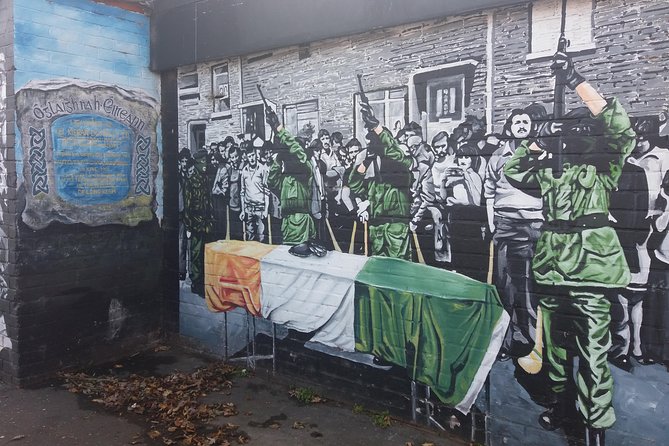
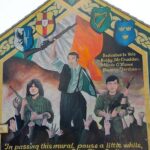
This is also where the Peace Walls enter the conversation in a practical way. Since 1969, separation barriers cut through the city, and you’re shown how Peace Walls became a long-term fixture rather than a short-term solution. A key theme here is that murals are not decoration. Many murals are political messages painted by ex-prisoners, linked to community identity and collective memory.
What to watch for: don’t just photograph the biggest faces and slogans. Look for the visual clues that tell you who is being remembered, who is being claimed, and what conflict-era language is still used today. That’s where the guide’s context is most useful.
Possible drawback: because this is anchored in Irish Republican history, the political framing will follow that line. If you’re hoping for a mirror-image Loyalist argument at each mural, you might find the emphasis shifts away from that.
More mural and peace wall routes we have walked
Peace Walls up close, then a message of peace you can write
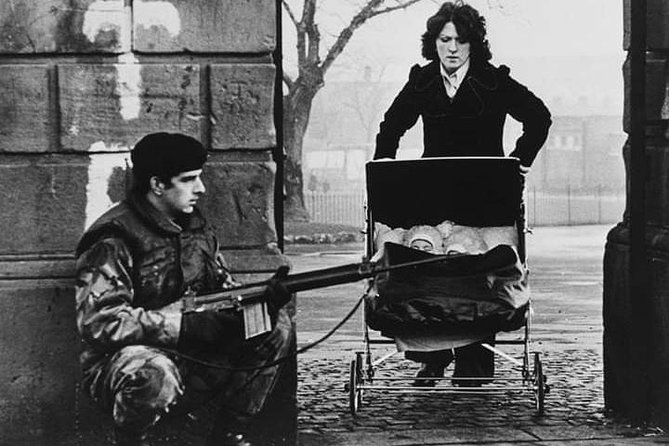
Next comes a Peace Wall stop where you visit both sides of the barrier. You learn why the wall was built, then you sign your name and write a message of peace.
This part is powerful because it’s not only symbolic. You’re literally standing where the city enforces separation, seeing how daily life changes when neighborhoods are meant to stay apart. Your guide points out how the barrier functions, and why, even after ceasefires, the city continues to hold onto the physical division.
Practical tip: bring your patience for tight spaces and active pedestrian areas. Even without crowds, Peace Wall viewpoints can feel a bit like moving through a lived border, not a theme park photo stop.
Also, take a second to read what people have written. Those messages are often the most honest “political statement” in the whole scene, because they’re personal, not scripted.
Shankill Road murals, Loyalist heartland, and the politics of who controls streets
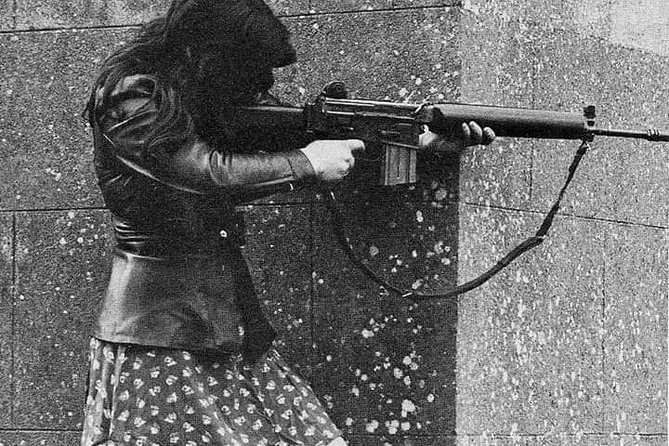
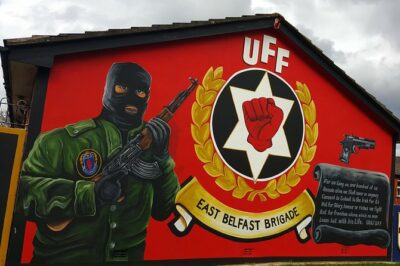
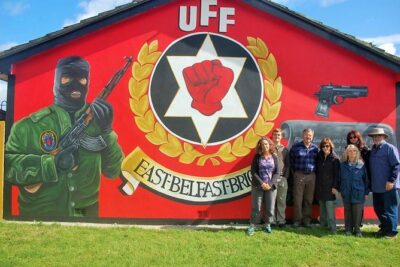
You then move to the Shankill Road, described as the heartland of Ulster Loyalism. Here, the tour focuses on how Loyalism developed and changed, and the role played by Loyalist paramilitaries during the conflict, specifically groups named as the UDA/UFF and UVF.
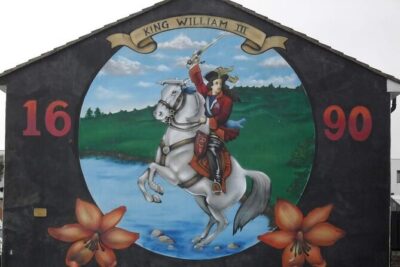
The murals you’ll see are stark and confrontational. They include images associated with masked figures and weapons, and they function like public identity cards for the community. The guide’s job is to connect the visuals to the historical arc, so you understand what the symbols are pointing to, not just what they look like.
Photo note: this is one of the best places for strong mural shots. Just be mindful of where you stand. Interface areas can be emotionally charged, and good tours keep you safe while still letting you look closely.
Clonard Martyrs memorial garden and the monastery’s role
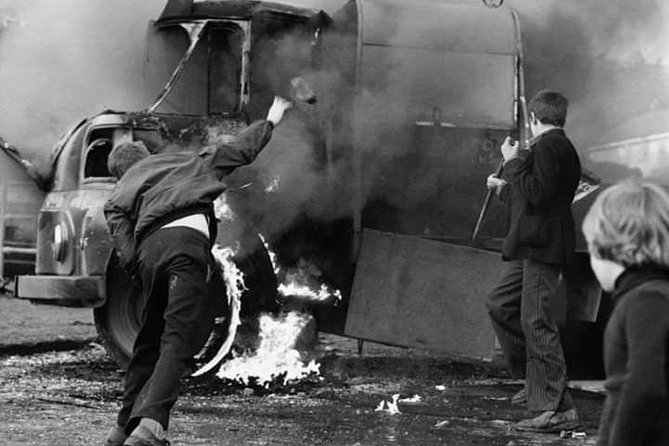
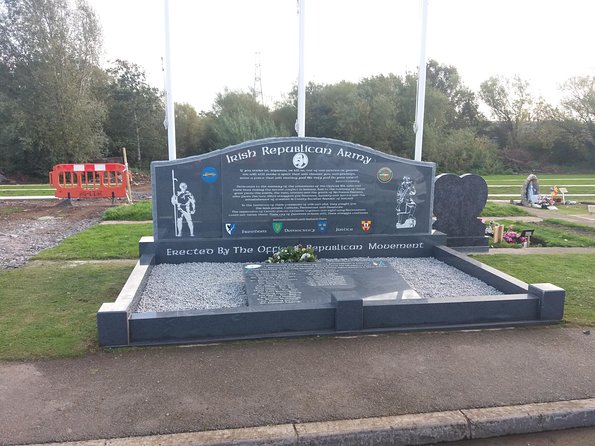
Clonard Martyrs is the tour’s memorial stop, tied to fallen volunteers and also to civilian casualties in the Greater Clonard area. The memorial is commissioned by a Greater Clonard ex-prisoners association and includes detailed plaques and panels that acknowledge both republican prisoner deaths and civilians killed by loyalists and British forces, with lists of names.
The level of specificity here is part of why this stop hits. You’re not only hearing broad history. You’re seeing how a community remembers individuals and decades in a structured way, including commemorations tied to dates like 20 August 2000 and plaques unveiled later in March 2001.
After that, you visit Clonard Monastery, located near the interface between the Falls Road and the Shankill Road. Your guide explains how Bombay Street and Cupar Street became central during early attacks in August 1969, and how residents fled and houses were burned, including Bombay Street suffering heavily.
You’ll also hear that priests involved early in safeguarding local residents lived and worked there, with names highlighted as Frs. Alec Reid and Gerry Reynolds, both associated with peace work. If you’re trying to understand how religious spaces tried to do something different during violence, this is one of the clearest places on the route to see it.
Milltown Cemetery: Bobby Sands, Red Hand markers, and why hunger strikes mattered
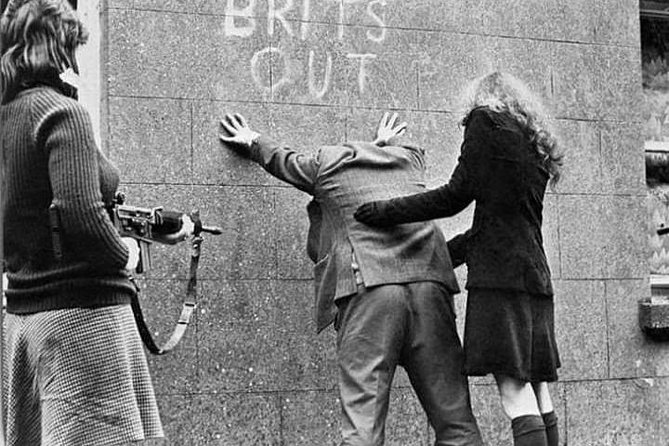
Milltown Cemetery is one of the most historically loaded stops on the tour. You visit the Republican Plot, where republican patriot dead are buried and where graves are marked with the Red Hand.
The tour specifically points to Bobby Sands, a Provisional Irish Republican Army member who died on hunger strike at HM Prison Maze. He is described as the leader of the 1981 hunger strike, which protested the removal of Special Category Status. You’ll also learn he was an elected MP at the time of his death, after 66 days.
Why this stop is valuable: hunger strikes can become slogans in travel storytelling. Here, the emotion and the timeline come from a real place and a real memorial structure, grounded in dates and context.
You’ll also learn the cemetery includes work by the National Graves Association in Belfast, covering multiple republican plots and graves of IRA volunteers killed in the 1920s and the Northern Campaign in the 1940s. That gives you a wider view beyond the hunger strike era.
If you want to photograph, do it with respect and time for reflection. This is not a quick drive-by. You’ll have enough time to absorb the layout and the memorial markers.
Bobby Sands murals and D Company, plus the museum built for questions
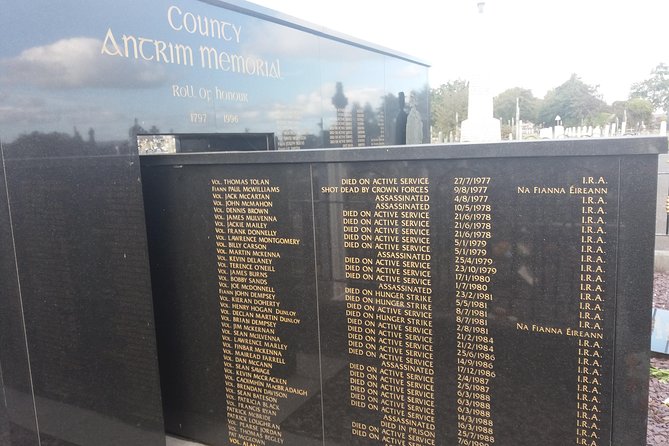
Back on the walls, you’ll see an iconic Bobby Sands mural and learn about the blanket and dirty protests that fed into the 1981 hunger strike wave. The tour also references D Company, 2nd Battalion Belfast Brigade, known as The Dogs, along with related sites such as a Garden of Remembrance linked to the group.
One of the most compelling parts of the experience is the Irish Republican History Museum stop, specifically associated with Eileen Hickey. The focus is resistance and struggle against British occupation over centuries, with your guide described as an Irish history specialist.
The museum element matters because it’s not just a collection of photos. It’s positioned as a place where you can meet ex-prisoners of war who share their experiences of the conflict, which turns your earlier street-level viewing into a story you can ask questions about.
Important timing detail: the museum only opens 10-2, Tuesday to Saturday. If it’s closed, the tour may switch to showing you around Ballymurphy instead, so you still get the mural and interface context.
Hands-on detail that’s unique on tours like this: you’re told you can see and handle plastic and rubber bullets used by Crown forces. That’s not just “interesting.” It helps you understand how conflict-era control worked at ground level, beyond the bigger headlines.
Divis Tower, Ballymurphy Road, and the Peace Wall loop for context
The tour continues with interface and memory landmarks. Divis Tower is listed as a viewpoint over the Falls Republican stronghold. The British Army is described as having a snipers nest and spy post there until 2005, and you’ll see names and murals tied to the first victims of the Troubles.
Then you visit Ballymurphy Road, including murals such as An Gorta Mor. You’ll drive through streets of republican Ballymurphy and see murals connected to local volunteers, including Jim Bryson and his Big Louie machine gun, described as used to terrify the British Army. Even if you already know the basics, this is where the city becomes a map of stories.
You’ll also see Divis, including a Welcome Wall and an area described as the heartland of the Irish Republican Army. The tour even includes a Peace Wall drive-by to see the biggest Peace Wall in Belfast, so you’re not only hearing about barriers. You’re seeing scale.
Price, time, and what you’re really getting for $255.50
At $255.50 per person for about 3 hours, this is not a bargain-basement tour. But it’s also not overpriced for what you actually receive.
Here’s why I think it can feel like good value:
- Private vehicle plus driver navigation, so you lose less time fighting logistics and more time understanding the places
- Admissions included at multiple stops, including the museum and cemetery-related entrances
- Multiple high-impact stops packed into a short time window, which is hard to do well in a group setting
- Access that’s not common to all tours, especially the private museum format and the opportunity to meet people with lived conflict experience
- Added sensory detail, like seeing and handling plastic and rubber bullets
If your goal is pure sightseeing, you might find cheaper city tours. If your goal is to understand why Belfast looks the way it does, and why people keep building memorials and murals into daily life, this route delivers.
The key is matching expectations. This is explicitly framed through an Irish Republican lens, so it’s best for travelers who want one clear perspective with strong context, not a neutral, round-the-both-sides-by-default script.
Who this tour fits best, and who should choose something else
This tour is a strong match if you:
- Want political analysis tied to real streets
- Like murals and memorial sites, and you want them explained, not just photographed
- Prefer private Q&A time, not a rushed bus lecture
- Are okay with emotional topics tied to imprisonment, violence, and civilian deaths
You may want to choose a different style if you:
- Want a fully balanced Loyalist and Republican narrative in equal weight at every stop
- Prefer lighter, purely cultural Belfast experiences
One practical note for pacing: with so many stops, wear comfortable shoes. Even if each stop is short, you’ll be stepping in and out repeatedly across street and memorial spaces.
Should you book this Belfast Troubles private tour?
If you want Belfast that feels real, not sanitized, I think this is a strong choice. The combination of murals, Peace Walls, Milltown Cemetery, the museum setting connected to Eileen Hickey, and the direct memorial emphasis makes the history harder to forget.
Book it if you’re curious about the Irish Republican interpretation of The Troubles and you want to ask questions in the moment. Skip it or pair it with a different tour if you need a more even-handed street-to-street comparison of Loyalist viewpoints.
FAQ
How long is the tour in Belfast?
It runs for about 3 hours.
Is pickup included, and where does it start?
Free pickup is offered from a central meeting location at the Leonardo hotel. Other pickup locations can have extra charges.
What language is the tour offered in?
The tour is offered in English.
When is the Irish Republican History Museum open?
The museum only opens from 10-2, Tuesday to Saturday.
What is included during the tour?
Admissions are included for multiple stops, along with private transportation, an air-conditioned vehicle, and experiences like visiting Milltown Cemetery and Peace Wall areas. The tour also includes time at the Irish Republican History Museum and the chance to see and handle plastic and rubber bullets used by Crown forces.
Can I get a full refund if I cancel?
Yes. You can cancel up to 24 hours in advance for a full refund. If you cancel less than 24 hours before the start time, the amount you paid is not refunded.
More From the Northern Ireland Pile
- Titanic Belfast Entrance Ticket: Titanic Visitor Experience Including SS Nomadic
★ 4.5 · 3,698 reviews - Cab Tours Belfast Famous Black Taxi Tours
★ 5.0 · 3,633 reviews - A History of Terror – Belfast City Centre Walking Tour
★ 5.0 · 2,883 reviews - Game of Thrones and Giant’s Causeway Full-Day Tour from Belfast
★ 5.0 · 2,291 reviews - Private Black Taxi Belfast City Tour
★ 5.0 · 2,188 reviews
The Walls and the Gables
- Belfast’s Political Mural Taxi Tour
★ 5.0 · 1,180 reviews - Famous 1.5 hour Belfast Murals Tour
★ 5.0 · 477 reviews - Belfast Murals Taxi Tour
★ 5.0 · 341 reviews - 2 Hour Private Belfast Taxi Cab Tour of Troubles & Peace walls
★ 5.0 · 240 reviews - Private Political History & Murals Tour Belfast
★ 5.0 · 182 reviews
The Troubles, Told Firsthand
- A History of Terror – Belfast City Centre Walking Tour
★ 5.0 · 2,883 reviews - Belfast’s Political Mural Taxi Tour
★ 5.0 · 1,180 reviews - Belfast Troubles Tour: Walls and Bridges
★ 5.0 · 853 reviews - Belfast Political Tour-Conflicting Stories Walking Tour
★ 4.5 · 459 reviews - Political Taxi Tour Belfast (1-7 People)
★ 5.0 · 294 reviews
More reviews from around the north
- Belfast history of terror & mural 1 hr express private taxi tour★ 5.0 · 3 reviews
- Game of Thrones scene location inc Giants causeway from Belfast★ 5.0 · 3 reviews
- Experience the Antrim Coast and the Land of Giants – Private Tour★ 5.0 · 3 reviews
- Giants Causeway Tour From Belfast including Game of thrones sites★ 5.0 · 3 reviews
- Private Coast Tour in Belfast★ 5.0 · 3 reviews
- Belfast to Dublin Transfer★ 5.0 · 3 reviews
Troubles History & Peace Process Tours, in full.
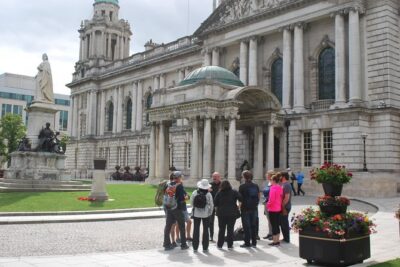 ★ 5.0A History of Terror – Belfast City Centre Walking TourFrom $362,883 reviews
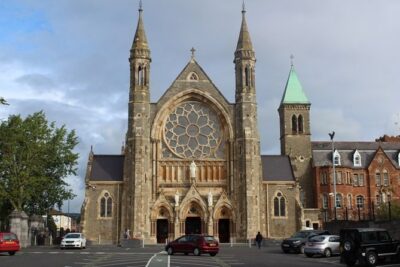 ★ 5.0Belfast’s Political Mural Taxi TourFrom $481,180 reviews
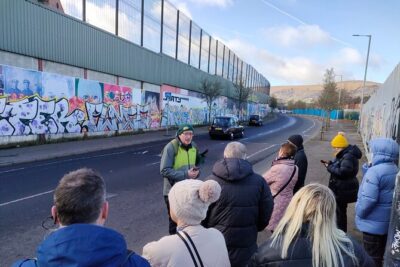 ★ 5.0Belfast Troubles Tour: Walls and BridgesFrom $33853 reviews
 ★ 4.5Belfast Political Tour-Conflicting Stories Walking TourFrom $36459 reviews
 ★ 5.0Political Taxi Tour Belfast (1-7 People)From $51294 reviews
 ★ 5.02 Hour Private Belfast Taxi Cab Tour of Troubles & Peace wallsFrom $117240 reviews
 ★ 5.02 hours Belfast Original Drivers The Troubles Black Taxi TourFrom $101227 reviews
 ★ 5.0Private Political History & Murals Tour BelfastFrom $76182 reviews