
REVIEW · BELFAST BLACK TAXI TOURS
History of Belfast conflict and terror 1 hour black taxi tour
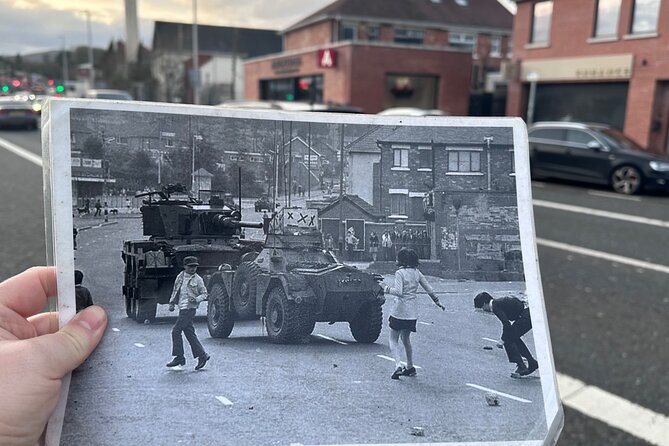
Belfast still remembers in loud colors. This 1 hour black taxi tour strings together the city’s most important mural stops, and I love the black cab ride that keeps your attention on what you see, not on transit logistics. I also like the driver-guide first-hand Troubles stories, which turn the Peace Wall and memorial gardens into lived experience. The one drawback is the subject matter is heavy, so if you want light sightseeing only, this can feel intense.
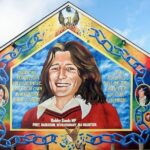
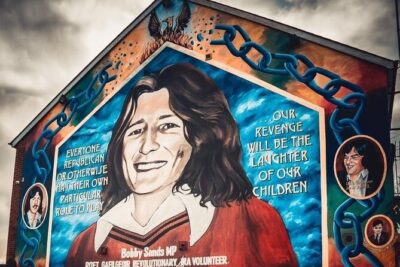
In a tight hour, you get quick walks at places like Bobby Sands murals, Clonard Monastery, and Shankill Road, plus enough photo time to make the murals matter. The commentary is in English, and because you are moving by taxi between sites, you can hear the context without feeling rushed by long transfers.
At $103.37 per person, the value is in the guide and transport, not ticketed attractions, since the listed stops are admission free. You start at Leonardo Hotel Belfast, or you can arrange a free pickup within 1 km of Belfast City Hall front gates, which helps a lot if you are not staying right downtown.
In This Review
- Key things that make this Belfast black taxi tour worth your hour
- How a 1 hour black taxi route works (and why it matters)
- Bobby Sands murals, memorial gardens, and the clash of viewpoints
- Divis flats and Divis Street murals: military logistics and international sympathy
- Clonard Monastery: architecture and the quiet work of the peace process
- The Peace Wall: what 50+ years of division looks like on the ground
- Shankill Road murals: Loyalist landmarks and the story of British rule
- Photo tips, timing realities, and what to listen for
- Price and value: what $103.37 is really buying
- Who this Belfast tour suits best (and who should rethink it)
- Book it or skip it: my take on the decision
- FAQ
- How long is the Belfast black taxi tour?
- How much does the tour cost?
- Where is the meeting point?
- Is pickup available?
- What language is the tour?
- Do I need to buy tickets or pay entry at the stops?
- Is a mobile ticket used?
- Are service animals allowed?
- Is the tour near public transportation?
- What if the tour is canceled because of minimum travelers?
- Can I get a full refund if I cancel?
Key things that make this Belfast black taxi tour worth your hour
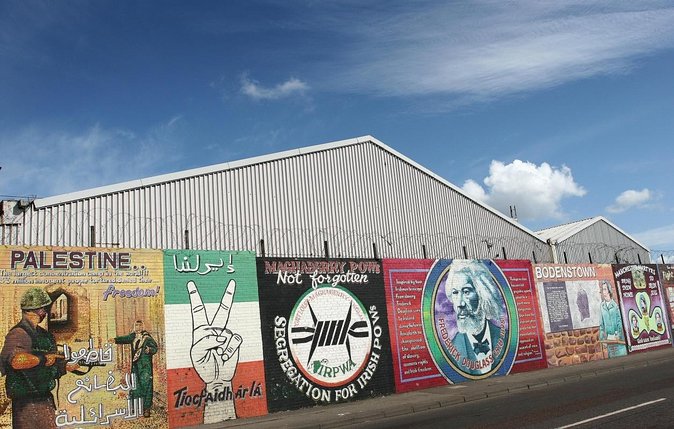
- Murals as storytelling: You do not just see artwork, you hear the political and personal meaning behind it.
- Personal Troubles perspective: The driver-guide shares what he lived through, not a detached lecture.
- Fast, photo-friendly route: Short stops at major sites, built for getting pictures without wasting time.
- Peace Wall context: You learn why the wall exists and how the world’s famous names fit into that message.
- Two sides of the city’s memory: Republican and Loyalist landmarks both show up, plus a stop that reaches beyond Belfast.
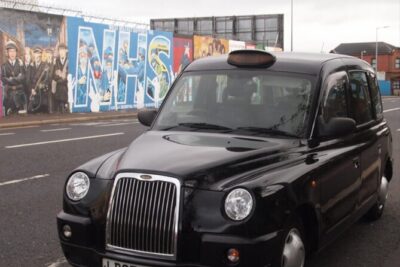
Other black cab drivers we have ridden with in Belfast
How a 1 hour black taxi route works (and why it matters)
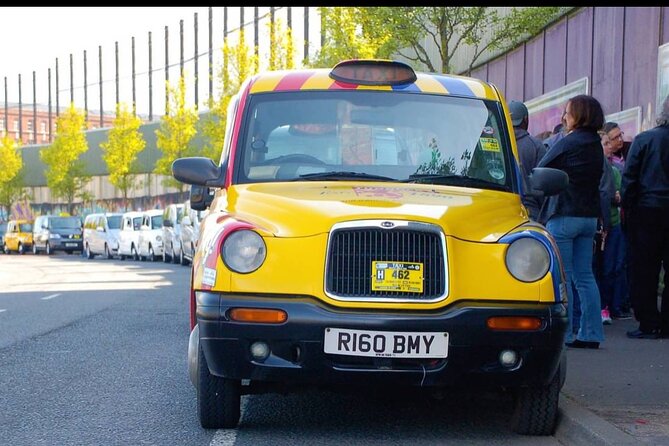
This is a straightforward format: you ride between key Belfast locations in a black taxi, then you step out briefly to look, photograph, and absorb the driver’s commentary at each stop. The whole plan is built around keeping momentum, because you are dealing with an area where many locations matter, but time is short.
That time pressure is also the tradeoff. Some stops are just a couple minutes, others give you a longer window. You should expect quick viewing rather than slow wandering. If you like to linger, pick your moments for photos and listen first, because the driver’s stories are the real centerpiece.
You will hear the city’s history as a spoken narrative, tied to specific places: murals, memorial gardens, and the physical barriers that still shape daily life. Since the tour is in English and uses a taxi, you can ask questions if you have them, and you do not have to manage multiple transit changes in a compact route.
Bobby Sands murals, memorial gardens, and the clash of viewpoints
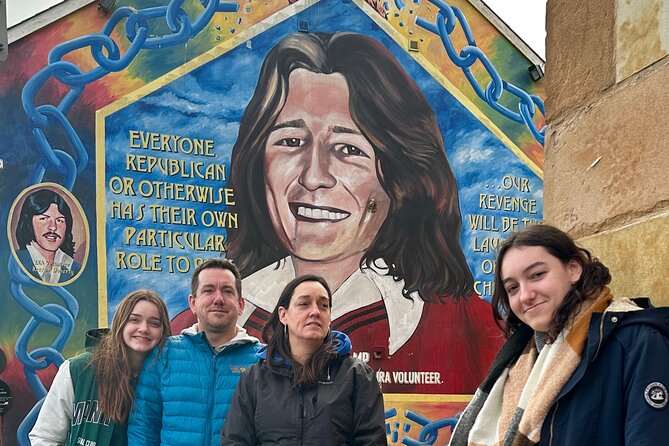
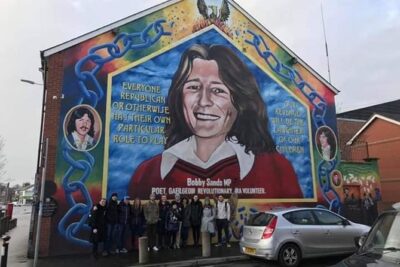
You start at the Bobby Sands Mural area, positioned in the part of the city associated with Republicanism. This stop is a fast one, but it sets the tone. The driver-guide, who lived through The Troubles, frames what you are seeing by talking about different versions of the conflict, including the Republican version, and viewpoints tied to Loyalism and the British perspective. Then the driver brings it back to what he lived through, so the murals feel less like decoration and more like evidence.
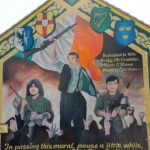
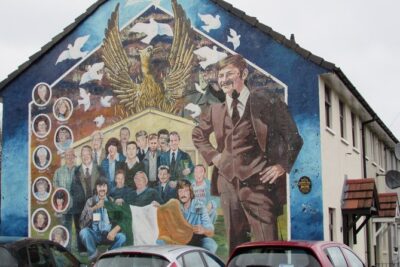
One big reason this stop works is that the murals act like a public memory wall. You can often see more than one layer: names, symbols, and memorial spaces that point to who people felt were victims, fighters, or heroes, depending on the storyteller. You also get access to memorial gardens in the area, which helps you see the human side, not just the political message.
What to watch for here:
- How the artwork uses faces, dates, and slogans to keep stories visible.
- The way the guide connects what you see to his lived experience during The Troubles.
- How quickly the narrative moves from artwork to meaning.
If you are sensitive to conflict imagery, this is the spot where you may feel the impact first. But it is also where you get the context that makes later stops easier to understand.
Divis flats and Divis Street murals: military logistics and international sympathy
Next up is Divis. The driver points out that the Divis flats were used as an army base, with the top two floors of the top block serving that role for more than 25 years. You also hear about helicopters dropping supplies daily to British troops. Even without a formal museum, that detail changes how you look at the buildings, because you start thinking about logistics, control, and survival, not just architecture.
Then you move to the International Mural Wall on Divis Street. This is a different mood. Here the murals shift from Belfast-specific memory toward solidarity with countries that the driver describes as not getting much media attention. You see more than 40 murals that depict stories linked to Cuban, Palestinian, and Kurdish people.
Why I think this stop is valuable for you:
- It reminds you that Belfast’s conflict did not exist in a vacuum.
- It shows how street art can be a way for communities to keep empathy visible.
- It gives your brain a contrast break after the heavier local sites.
The time is short, so do not plan on reading everything line by line. Instead, focus on how styles and subject matter shift from residential tension at Divis to global messaging on Divis Street. That shift is part of what makes the route feel intentional.
Other Troubles history tours, reviewed the same way

Clonard Monastery: architecture and the quiet work of the peace process
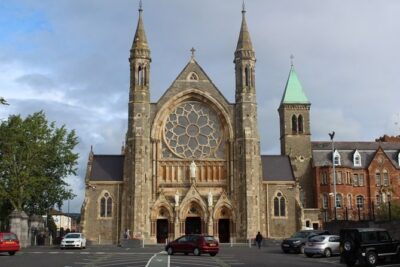
Clonard Monastery is brief on the schedule, but it is memorable. It is built over 100 years ago by local and Italian craftsmen, and you are told it is breath taking. Even if you only get a couple minutes, you are still at a real landmark with enough atmosphere that the stop feels like a pause.
The other reason it matters is what happened there during the peace process. The monastery hosted secret talks between Gerry Adams and John Hume, with Father Alex Reid involved as the key facilitator. That is a huge deal, because it connects the murals and walls you see outside to negotiations that were happening behind closed doors.
In practical terms, this stop is a good place to reset your emotions. After murals that point back to violence and division, the monastery is where you hear about the effort to shift toward peace, even if it was secret and complicated.
Since your time here is limited, look first at the setting and the craftsmanship, then listen for how the guide ties that physical calm to the political turning point. The contrast is the lesson.
The Peace Wall: what 50+ years of division looks like on the ground
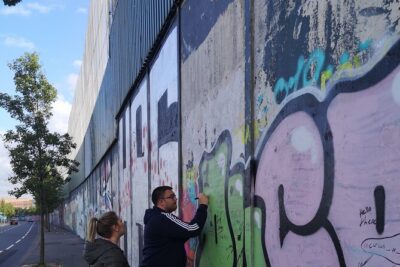
The Peace Wall stop is the longest walk on the route, and it is where many people get their most powerful photos. The walls were built over 50 years ago to divide Catholic and Protestant communities, and they stretch throughout the city. That physical separation is the point. You are not reading about division, you are standing in it.
The driver also explains how the walls carry quotes of peace that have appeared worldwide, with names you might recognize, including President Clinton, Lady Gaga, and Morgan Freeman. That detail changes your perspective. It is not only a barrier built for division. It also becomes a public billboard for a peace message that travels far beyond Belfast.
What to do while you are there:
- Take a wide shot first, to capture how the wall lines up with the streets.
- Then take close-ups of quotes, because those are often what you remember later.
- Listen to how the driver frames peace here, because the term can feel simple until you understand the purpose of the wall.
This stop is emotionally intense for a lot of people, especially if you have not encountered the idea of peace walls before. If you want to handle it well, give yourself a moment before the wall and ask the guide, in your own words, what he wants you to notice. He will connect the artwork and quotes to the reason these barriers were built.
Shankill Road murals: Loyalist landmarks and the story of British rule
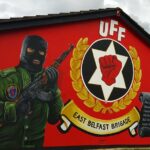
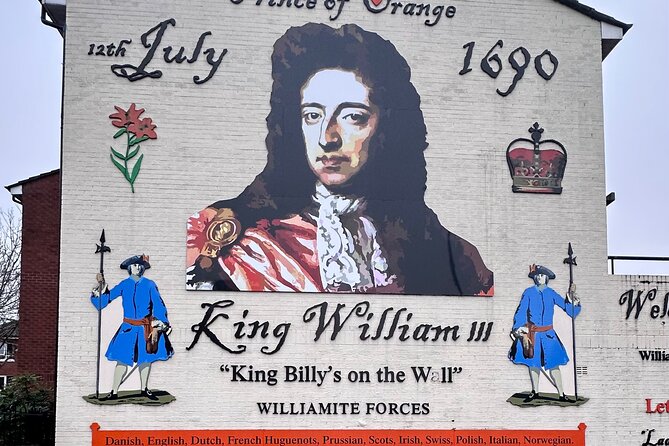
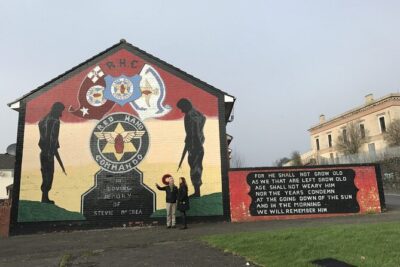
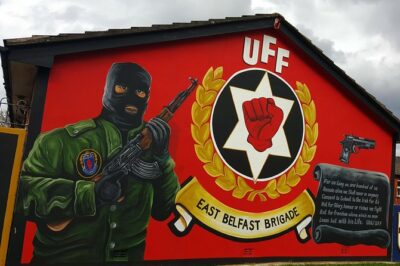
You finish at Shankill Road, described as the heart and birthplace of the UDA and UVF. The driver talks about British rule in Ireland and the loyalist people of the crown, and you look at murals that carry that story visually.
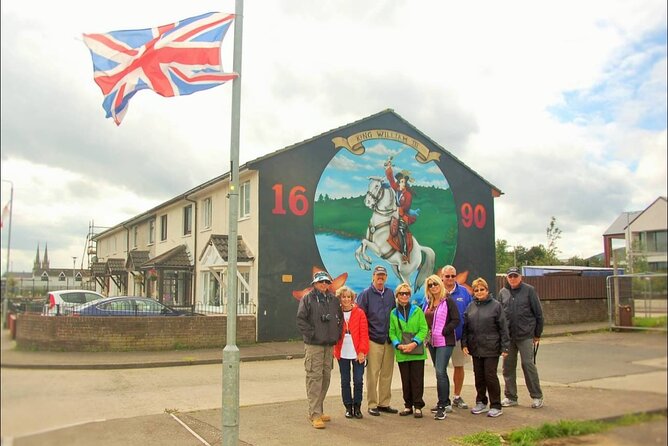
If Bobby Sands murals guide you through Republican memory, this stop guides you through Loyalist memory. That is a big part of why the tour feels balanced in structure, even while the content is clearly rooted in conflict history. You are getting two sides of the street-level narrative, not just one.
Shankill Road is also a place where the murals are not isolated art pieces. They are part of a neighborhood landscape. Standing there, you start noticing how the city’s conflict history is embedded in everyday places, from walls to streets to memorial symbols.
Expect the driver to connect the imagery to names and groups mentioned in the tour route, like UDA and UVF. Do not rush the photos. Pick one or two mural sections to photograph clearly, then keep your camera down long enough to absorb what the guide says. The details you miss while shooting are often the most important ones.
Photo tips, timing realities, and what to listen for
Because the stops range from 2 minutes to 20 minutes, timing is your best friend. You can absolutely get good photos, but the tour works best if you treat photos as quick snapshots, not a full photo walk.
I suggest this approach:
- Decide your photo priority for each stop before you hop out.
- Start each stop by listening, then take your photos after you understand the message.
- If you are traveling with a camera, keep battery and storage ready, because you will see repeated mural themes across multiple stops.
Photo opportunities are built into the route, especially for murals and the Peace Wall quotes. But the real differentiator is the driver-guide’s storytelling. The guide shares personal experiences of living through The Troubles, and that changes how you interpret everything: why a mural is there, why a memorial garden exists, and why a wall is still needed in the cityscape.
Also remember: this is a focused 1 hour tour. If you want a relaxed pace, pair this with extra independent time later. If you want the key locations with context without spending half a day, this format hits the sweet spot.
Price and value: what $103.37 is really buying
The price is $103.37 per person for about 1 hour, with pickup offered. That means you are paying for a guided black taxi route, a driver-guide who provides commentary in English, and access to multiple major sites where your time on the ground is intentionally short.
The value gets stronger because the listed stops are described as admission ticket free. You are not paying extra to enter buildings or attractions during the main route. Instead, you get your time and your story from the guide.
Is it a bargain? It depends on how you like to travel. If you enjoy guided context and you want to see multiple conflict-related landmarks in one shot, it can feel very efficient. If you prefer to wander slowly, read at your own pace, and take your time at fewer sites, the short stop durations may feel limiting for the price.
Think of it as paying for a translator between mural and meaning. If you show up ready to listen, you get your money’s worth.
Who this Belfast tour suits best (and who should rethink it)
This tour fits well if you want:
- A quick route through the city’s mural hotspots, including the Peace Wall.
- A guide who ties each stop to what he lived through during The Troubles.
- A mix of viewpoints, including Republican and Loyalist landmarks, rather than one-sided storytelling.
It also helps if you like practical city touring. Pickup options reduce friction, and it is close to public transportation, so you are not locked into only one way to get around Belfast.
Who might rethink it:
- People who want purely scenic Belfast photos without conflict context.
- Anyone who gets overwhelmed by emotionally heavy subject matter, because the tour is built around it from the first mural stop.
Good news: the tour notes say most travelers can participate, and it also allows service animals.
Book it or skip it: my take on the decision
I would book this tour if you want your Belfast to have context, not just postcard views. In one hour you get a structured route across major memorial and mural locations, with commentary in English and a driver-guide who shares personal experience of The Troubles. The Peace Wall stop alone gives you the kind of image that sticks, and the surrounding stops help you understand why it exists.
I would skip it if you are looking for a light, relaxed introduction to Belfast. The tour is meaningful, and that meaning comes from conflict history. If your goal is upbeat and casual, you may find the subject matter too intense for a short outing.
If you do book, go in prepared. Bring a phone or camera, but bring your attention too. This tour is less about collecting sights and more about reading the city through the stories attached to its walls.
FAQ
How long is the Belfast black taxi tour?
It runs for about 1 hour.
How much does the tour cost?
The price is listed as $103.37 per person.
Where is the meeting point?
The start point is Leonardo Hotel Belfast, Great Victoria St, Belfast BT1 6DY.
Is pickup available?
Yes. Pickup is offered within a 1 km radius from Belfast City Hall front gates. Cruise ship pickup is not available, but the cruise ship shuttle bus leaves outside Visit Belfast, across the street from city hall. You can ask for pickup at the city hall front gates.
What language is the tour?
The tour is offered in English.
Do I need to buy tickets or pay entry at the stops?
The stops listed are described as admission ticket free.
Is a mobile ticket used?
Yes, the tour includes a mobile ticket.
Are service animals allowed?
Yes, service animals are allowed.
Is the tour near public transportation?
Yes, it is near public transportation.
What if the tour is canceled because of minimum travelers?
If it is canceled because the minimum is not met, you are offered a different date or a full refund.
Can I get a full refund if I cancel?
Yes, you can cancel up to 24 hours in advance for a full refund. Cancellation needs to be at least 24 hours before the experience start time.
More From the Northern Ireland Pile
- Titanic Belfast Entrance Ticket: Titanic Visitor Experience Including SS Nomadic
★ 4.5 · 3,698 reviews - Cab Tours Belfast Famous Black Taxi Tours
★ 5.0 · 3,633 reviews - A History of Terror – Belfast City Centre Walking Tour
★ 5.0 · 2,883 reviews - Game of Thrones and Giant’s Causeway Full-Day Tour from Belfast
★ 5.0 · 2,291 reviews - Private Black Taxi Belfast City Tour
★ 5.0 · 2,188 reviews
The Troubles, Told Firsthand
- A History of Terror – Belfast City Centre Walking Tour
★ 5.0 · 2,883 reviews - Belfast’s Political Mural Taxi Tour
★ 5.0 · 1,180 reviews - Belfast Troubles Tour: Walls and Bridges
★ 5.0 · 853 reviews - Belfast Political Tour-Conflicting Stories Walking Tour
★ 4.5 · 459 reviews - Political Taxi Tour Belfast (1-7 People)
★ 5.0 · 294 reviews
Belfast, From the Back of a Cab
- Cab Tours Belfast Famous Black Taxi Tours
★ 5.0 · 3,633 reviews - Private Black Taxi Belfast City Tour
★ 5.0 · 2,188 reviews - Belfast’s Political Mural Taxi Tour
★ 5.0 · 1,180 reviews - Belfast black taxi tours
★ 5.0 · 1,166 reviews - Official World Famous Belfast Taxi Tour ™
★ 5.0 · 623 reviews
More reviews from around the north
- Belfast history of terror & mural 1 hr express private taxi tour★ 5.0 · 3 reviews
- Game of Thrones scene location inc Giants causeway from Belfast★ 5.0 · 3 reviews
- Experience the Antrim Coast and the Land of Giants – Private Tour★ 5.0 · 3 reviews
- Giants Causeway Tour From Belfast including Game of thrones sites★ 5.0 · 3 reviews
- Private Coast Tour in Belfast★ 5.0 · 3 reviews
- Belfast to Dublin Transfer★ 5.0 · 3 reviews
Belfast Black Taxi Tours, in full.
 ★ 5.0Cab Tours Belfast Famous Black Taxi ToursFrom $1003,633 reviews
 ★ 5.0Private Black Taxi Belfast City TourFrom $1102,188 reviews
 ★ 5.0Belfast’s Political Mural Taxi TourFrom $481,180 reviews
 ★ 5.0Belfast black taxi toursFrom $551,166 reviews
 ★ 5.0Official World Famous Belfast Taxi Tour ™From $90623 reviews
 ★ 5.0Iconic Belfast Black Cab TourFrom $97449 reviews
 ★ 5.0Belfast Murals Taxi TourFrom $62341 reviews
 ★ 5.0Political Taxi Tour Belfast (1-7 People)From $51294 reviews