
REVIEW · BELFAST BLACK TAXI TOURS
Express Terror and Peace 90 min Private Belfast Cab /Taxi Tour
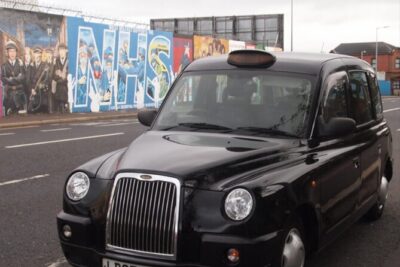
Belfast can feel split in your hands. This private taxi tour strings together the city’s most important political sites, especially the murals tied to the Troubles and the peace messages that replaced them. I really like the black cab format for this, because you cover real ground without turning your day into a walking endurance test.
You also get a guide who slows down and explains what you are seeing, not just what it is called. The main thing to consider is tone: you will hear about violence, hunger strikes, and the IRA and loyalist causes, so it is not the sort of light sightseeing that fits everyone.
In This Review
- Key things you should know before you go
- A Black Cab Way to Understand Belfast’s Troubles to Peace
- Price and Duration: What You Really Pay For
- Pickup at Belfast City Hall, and How to Avoid Start-Day Stress
- Stop 1: Divis Flats, Falls Road Mouth, and the Roots of 1966
- Stop 2: International Mural Wall on Divis Street
- Stop 3: Bombay Street and the Birth of the Provisional IRA
- Stop 4: Falls Road Library and the World Facing Bobby Sands
- Stop 5: Clonard Monastery and the Wedding Rings Altar
- Stop 6: The Peace Wall, Messages for Peace, and Still-Visible Division
- Stop 6 (continued): Crumlin Road Gaol and Courthouse
- Stop 7: Shankill Road, UVF and UFF Origins, and Orange Heritage
- Stop 8: Shankill Graveyard and Loyalist Murals Up Close
- How to Get the Most Out of the Cab Ride
- Who Should Book This Belfast Taxi Tour
- Should You Book Express Terror and Peace?
- FAQ
- How long is the Express Terror and Peace private Belfast taxi tour?
- Is the tour private?
- What is the pickup area in Belfast city center?
- Do you get picked up from airports or train stations?
- Does the tour include murals like the Bobby Sands mural?
- How is the ticket delivered?
- Are admissions required at the stops?
- What is the cancellation policy?
- Are children allowed on this tour?
Key things you should know before you go
- Private cab, not a bus, so you can ask questions and set the pace
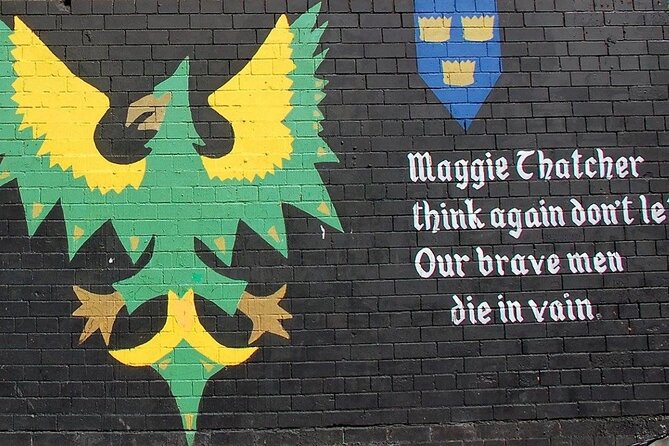
- Murals as a timeline, including the Bobby Sands mural and both sides of the story
- Car-based coverage, faster than a pure walking route while still getting out to look closely
- Stops with direct meaning, from Divis Flats to Clonard Monastery and the Peace Wall
- Guides that make it human, with clear context that ties the streets to the headlines
Other black cab drivers we have ridden with in Belfast
A Black Cab Way to Understand Belfast’s Troubles to Peace
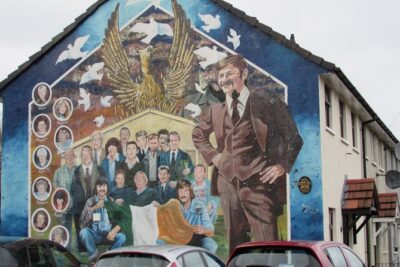
This tour is built around the idea that Belfast is easiest to understand when you see the map and the messaging at the same time. You move through neighborhoods that once felt like separate worlds, and you watch how the city’s walls speak. Murals are not decoration here. They are memory, warning, protest, and, in many places today, a push toward peace.
Riding in a taxi also matters. Belfast’s story is spread out, and driving lets you hit key points without spending the whole tour bouncing between bus stops or fighting through hills you did not plan for. You still get short stops out of the car, so you can read what is in front of you instead of learning everything only from a phone screen.
The best part, in my opinion, is the way the tour keeps balancing viewpoints. Some stops focus on republican history, others on loyalist history, and the murals themselves often show two sides of the same conflict. That balance makes it easier for you to connect the dots.
Price and Duration: What You Really Pay For
At about $178.26 per person for an approximately 2-hour private tour, you are paying for time with a local guide plus the convenience of a cab route. This is not a budget “see the sights” activity. It is closer to a guided education session with wheels.
Here is why I think it can still be good value. First, you are not just driving past sites. You stop at murals and landmarks that are specifically tied to the Troubles, hunger strikes, peace talks, imprisonment, and community memory. Second, being private means your questions are not competing with a crowd. If you want the story in plain language, that matters.
If you are the type who likes to walk on your own, you could recreate bits of this. But if you want structure, context, and tight pacing, the taxi format earns its keep.
Pickup at Belfast City Hall, and How to Avoid Start-Day Stress
The tour includes pickup from Belfast city center within a 1 km radius of Belfast City Hall. That is a helpful area to base yourself because you can usually reach it easily from most central hotels.
If you are coming from an airport or train station, pickup is not included, and any pickup surcharge is paid on the day in cash. If you are on a cruise, pickup from the port is not offered since it is outside Belfast city centre, and you will need to use the cruise shuttle to reach the area near Visit Belfast, which is across the street from the City Hall.
A practical tip: if you are unsure where your ship shuttle stops, aim to meet at the Belfast City Hall front gates. That is specifically where the tour says it can collect you, assuming you let them know ahead of time.
Other Troubles history tours, reviewed the same way

Stop 1: Divis Flats, Falls Road Mouth, and the Roots of 1966
Divis Flats sits at the start of the mouth of the Falls Road. The tour uses this spot to frame why unrest escalated, including the riots of 1966 that fed into what became known as The Troubles. You get out to look at the area, then the guide connects the location to the timeline.
One key detail here is the British Army presence. The flats were occupied by the British Army up until 2007. That long stretch matters, because it helps you understand this was not a short-term incident. It was a sustained reality in the neighborhood.
Time on stop is about 10 minutes. That is enough to get the gist without turning this into a museum visit. If you want slower pacing, use your time in the cab to ask questions, then ask follow-ups as you stand at Divis.
Stop 2: International Mural Wall on Divis Street
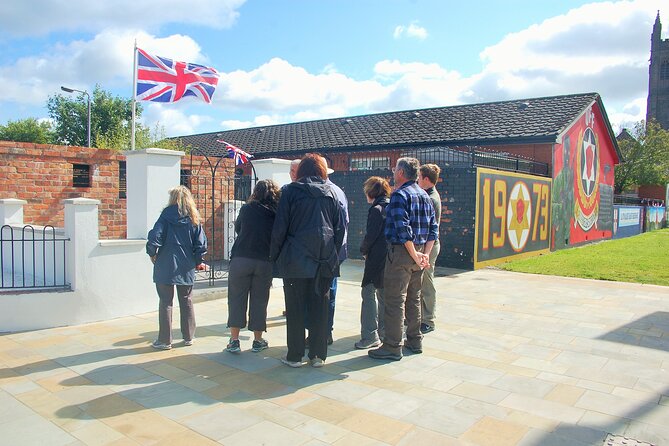
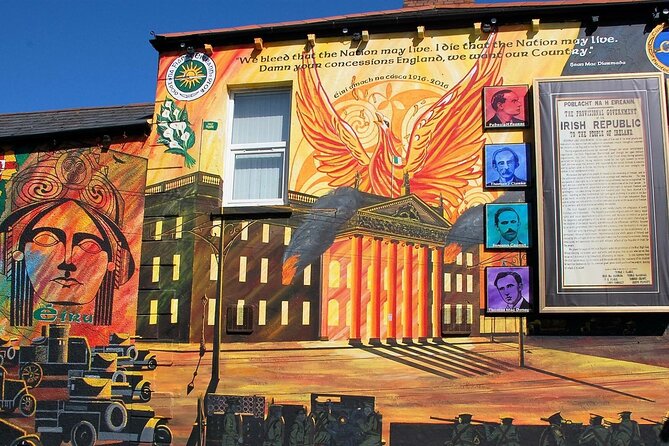
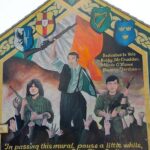
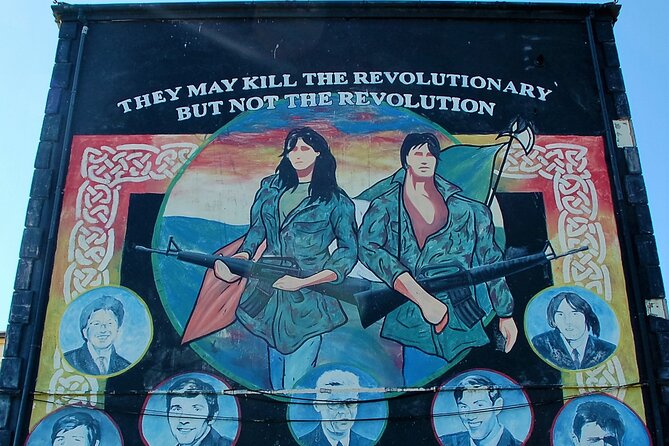
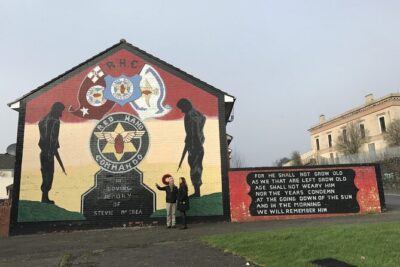
Next comes the International Mural Wall on Divis Street, described as a famous wall with over 60 murals that change as the world changes. This is where the tour shifts from local grievances to a broader idea: people paint their message into public space, and the subjects evolve over time.
You may see references like Nelson Mandela, Ukraine, and Palestine mentioned as part of the current mural themes. The guide’s talking point is important for you to listen for, because it frames why murals are powerful. The wall highlights that there are two sides to many stories, and you can spot how different communities choose what to remember or promote.
The stop is about 15 minutes. That is a good length for reading murals closely without getting fatigued. If you have photo mode and you want to shoot, bring your patience. These are visually busy surfaces, and it helps to focus on a few murals rather than trying to capture everything.
Stop 3: Bombay Street and the Birth of the Provisional IRA
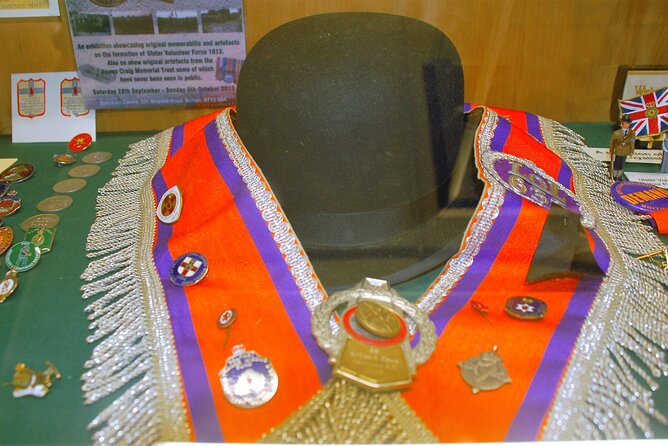
Bombay Street is presented as an official birth point of the Provisional Irish Republican Army, born out of the ashes of 1969 when thousands were displaced and burned out by police and loyalist actions.
This stop is short, about 15 minutes, but it is loaded with context. The value for you is that the guide can explain what kind of political shift took place around that period, using the street name as an anchor. In a place like Belfast, names carry weight. Bombay Street is one of those names.
A consideration: if you are not expecting intense political history, this might land harder than the earlier mural wall. Keep your expectations aligned with the theme of the tour: terror and peace, told through real locations.
Stop 4: Falls Road Library and the World Facing Bobby Sands
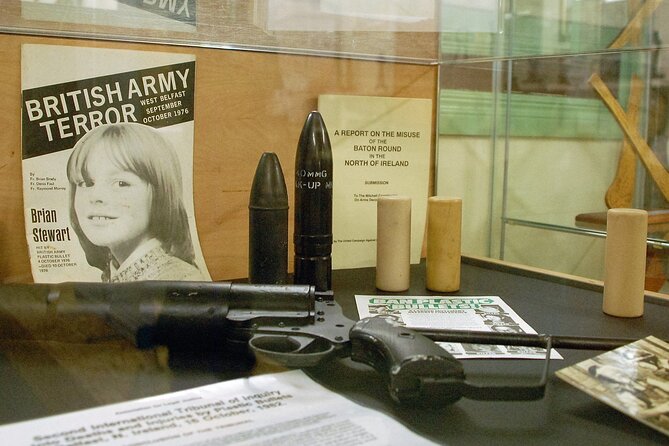
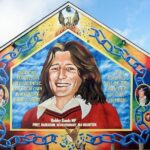
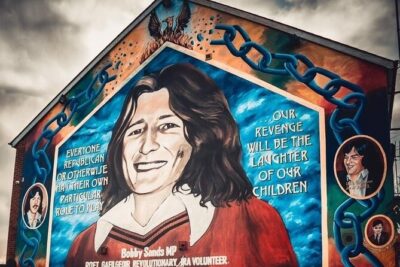
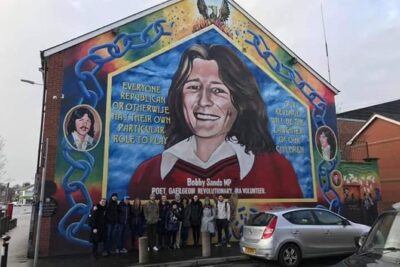
At the Falls Road Library, the tour points you toward a famous Bobby Sands mural and walks you through the 1981 hunger strike era. You are also given architectural and institutional context, including that the building had earlier roles as a RIC station and black-and-tan station.
This is one of those places where you will likely look longer than the scheduled time. About 15 minutes is the plan, but the story is emotional, and the guide tends to slow down so you can actually absorb what you are seeing.
If you like understanding history through human stories, this is a highlight. Hunger strikes are not abstract. They are choices made under pressure, and the mural helps you connect those choices to a person in the public eye.
Stop 5: Clonard Monastery and the Wedding Rings Altar
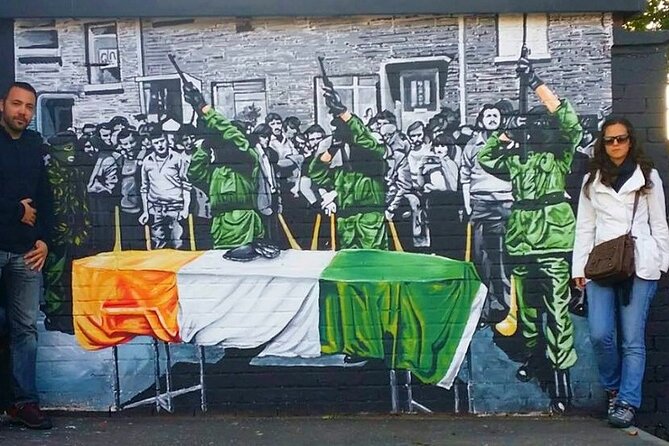
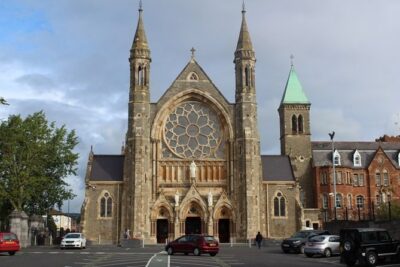
Clonard Monastery is where the tour introduces a different kind of Belfast story: the secret peace talks between Gerry Adams and John Hume. The monastery is described as having been discovered as bugged by MI5 later on.
Then comes an unusual, very specific detail: the altar is made up of local women’s wedding rings. That is exactly the kind of local material detail that makes history feel real. You are not just hearing about big decisions. You are seeing how communities contributed, even in small, physical ways.
Stop time is about 15 minutes. That is usually enough to get the main points, but if you are moved by artifacts and symbolic objects, you may want a few extra minutes. If your cab time allows it, ask your guide to repeat the key story beats, because this stop is packed.
Stop 6: The Peace Wall, Messages for Peace, and Still-Visible Division
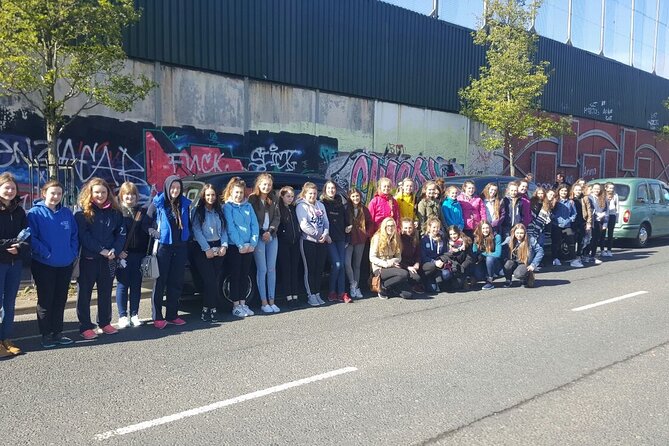
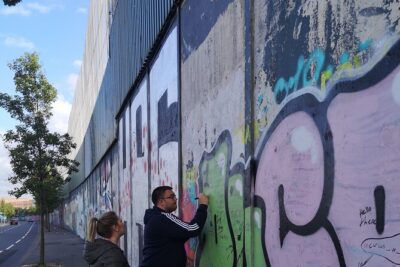
The Peace Wall is described as massive walls put up in 1969 by the British Army, and it still remains in various parts of the city today. The tour also points out how people now write their quotes for peace, sometimes including presidents or stars, plus other messages visitors and locals add over time.
This stop is about 15 minutes. You will likely want to stand back and then walk a step closer, because the details tend to show themselves in layers. Up close, you can read the handwriting and see how the messages have accumulated.
For you, this stop is a reality check. Even after political progress, physical barriers can keep showing up in the city. And at the same time, the peace notes show how people claim space again, turning a divider into a wall that also carries hope.
Stop 6 (continued): Crumlin Road Gaol and Courthouse
Crumlin Road Gaol and Courthouse has seen major activity during the Troubles, including IRA successful escapes and RPG attacks. The building dates back to the 1800s and was used as a hanging jail right up to the 1960s.
This is another 15-minute stop, and it is a heavy one. The value is that it links ideas to consequences. You can talk politics all day long, but a prison adds a hard stop to the conversation. It tells you how the conflict played out in institutions, not only in speeches.
If you prefer cheerful topics, this is your turning point. But if you want the full story, this stop helps you understand why later peace efforts mattered so much.
Stop 7: Shankill Road, UVF and UFF Origins, and Orange Heritage
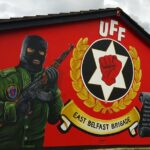
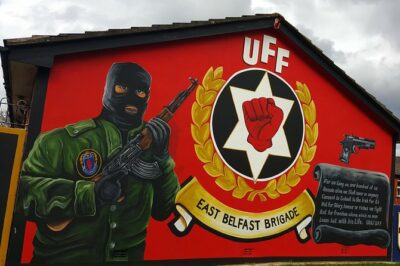
Shankill Road is split into lower and upper areas, and the tour frames it as one of Belfast’s oldest roads going back to around 445 AD. It is also described as the birthplace of the UVF and UFF, with your guide connecting historic William of Orange references to present-day displays.
If your visit lands close to July, you may see one of the notorious bonfires. That adds seasonal context, because some traditions are tied to community identity and calendar time.
Stop time is about 15 minutes. Since the route and timing are tight, use this stop to ask your guide how they see the shift from older symbolism to today’s neighborhood expressions. That is where the tour’s real explanatory power shows up.
Stop 8: Shankill Graveyard and Loyalist Murals Up Close
Shankill Graveyard is your photo chance for loyalist murals depicting loyalism and British history. This is different from the earlier mural stops because it is tied to the landscape of memory. You are not only seeing political slogans. You are looking at how communities mark the past and keep identity visible.
The stop time is about 15 minutes. That usually works well for photos and short questions, but it is also long enough to notice how mural styles and themes can differ from the Falls Road side.
One good practical approach: pick a small number of murals to focus on here and match them to what you heard earlier. When the story clicks between stops, the tour becomes more than a list of names.
How to Get the Most Out of the Cab Ride
A taxi tour can become either passive or interactive, and your outcome is mostly in your hands. Here is how I recommend you use your time:
- Ask one or two timeline questions early. For example, where the key shift happened in 1966 and 1969, then how it moved toward hunger strike years.
- Look for the two-sided messaging. The tour explicitly frames murals as showing more than one view. Treat each wall like a source, not just a picture.
- Use the stops for meaning, not only photos. If you only take pictures, you lose half the point. Stand back, read, then zoom in with your eyes before you zoom in with your camera.
- Expect emotional topics. This is terror and peace, not just peace. If that suits you, you’ll leave with a calmer understanding than the one you started with.
If your guide is someone like Jim, it helps to know that the best tours here are guided by people who can explain without getting lost in jargon. You want clear links between street, event, and mural message.
Who Should Book This Belfast Taxi Tour
This tour is a strong fit if you want:
- A structured way to learn the history and politics of Belfast
- To see the city’s most important murals, including the Bobby Sands mural
- A route that covers more ground than a walking tour can manage in two hours
- A private experience where your questions get time
It might be less ideal if you want only light sightseeing, or if you feel uncomfortable with political and conflict topics presented through real locations and memorial-style murals.
For many first-timers, this is one of the best ways to get bearings fast. For returning visitors, it can still be useful because it connects sites into a single story line, not disconnected photo stops.
Should You Book Express Terror and Peace?
I think this is worth booking if you are in Belfast for a short time and you want to understand what you are seeing. The private cab setup, the mural-heavy route, and the stop choices from Divis to Shankill make it feel like a guided narrative, not a sightseeing shuffle.
But if you are the type who hates hearing about violence and political conflict, you should skip it and choose something more relaxed. Belfast deserves gentle curiosity too, but this particular tour is not that kind of day.
If you are comfortable with serious topics and you want a clear, street-level explanation of how Belfast moved from conflict toward peace, book it. Bring questions, wear good walking shoes in case you linger at murals, and plan for a tour that leaves you thinking.
FAQ
How long is the Express Terror and Peace private Belfast taxi tour?
The tour runs for about 2 hours.
Is the tour private?
Yes. It is a private tour, so only your group participates.
What is the pickup area in Belfast city center?
Pickup is offered from within a 1 km radius from Belfast City Hall front gates.
Do you get picked up from airports or train stations?
Pickup from airports, train stations, and cruise ports is not included. A surcharge is paid on the day in cash only.
Does the tour include murals like the Bobby Sands mural?
Yes. You see the city’s most important murals, including the Bobby Sands mural.
How is the ticket delivered?
You get a mobile ticket.
Are admissions required at the stops?
The stops listed here show free admission, with no admission tickets needed based on the information provided for each stop.
What is the cancellation policy?
You can cancel for free up to 24 hours in advance for a full refund.
Are children allowed on this tour?
Children must be accompanied by an adult.
More From the Northern Ireland Pile
- Titanic Belfast Entrance Ticket: Titanic Visitor Experience Including SS Nomadic
★ 4.5 · 3,698 reviews - Cab Tours Belfast Famous Black Taxi Tours
★ 5.0 · 3,633 reviews - A History of Terror – Belfast City Centre Walking Tour
★ 5.0 · 2,883 reviews - Game of Thrones and Giant’s Causeway Full-Day Tour from Belfast
★ 5.0 · 2,291 reviews - Private Black Taxi Belfast City Tour
★ 5.0 · 2,188 reviews
The Troubles, Told Firsthand
- A History of Terror – Belfast City Centre Walking Tour
★ 5.0 · 2,883 reviews - Belfast’s Political Mural Taxi Tour
★ 5.0 · 1,180 reviews - Belfast Troubles Tour: Walls and Bridges
★ 5.0 · 853 reviews - Belfast Political Tour-Conflicting Stories Walking Tour
★ 4.5 · 459 reviews - Political Taxi Tour Belfast (1-7 People)
★ 5.0 · 294 reviews
Belfast, From the Back of a Cab
- Cab Tours Belfast Famous Black Taxi Tours
★ 5.0 · 3,633 reviews - Private Black Taxi Belfast City Tour
★ 5.0 · 2,188 reviews - Belfast’s Political Mural Taxi Tour
★ 5.0 · 1,180 reviews - Belfast black taxi tours
★ 5.0 · 1,166 reviews - Official World Famous Belfast Taxi Tour ™
★ 5.0 · 623 reviews
More reviews from around the north
- Belfast history of terror & mural 1 hr express private taxi tour★ 5.0 · 3 reviews
- Game of Thrones scene location inc Giants causeway from Belfast★ 5.0 · 3 reviews
- Experience the Antrim Coast and the Land of Giants – Private Tour★ 5.0 · 3 reviews
- Giants Causeway Tour From Belfast including Game of thrones sites★ 5.0 · 3 reviews
- Private Coast Tour in Belfast★ 5.0 · 3 reviews
- Belfast to Dublin Transfer★ 5.0 · 3 reviews
Belfast Black Taxi Tours, in full.
 ★ 5.0Cab Tours Belfast Famous Black Taxi ToursFrom $1003,633 reviews
 ★ 5.0Private Black Taxi Belfast City TourFrom $1102,188 reviews
 ★ 5.0Belfast’s Political Mural Taxi TourFrom $481,180 reviews
 ★ 5.0Belfast black taxi toursFrom $551,166 reviews
 ★ 5.0Official World Famous Belfast Taxi Tour ™From $90623 reviews
 ★ 5.0Iconic Belfast Black Cab TourFrom $97449 reviews
 ★ 5.0Belfast Murals Taxi TourFrom $62341 reviews
 ★ 5.0Political Taxi Tour Belfast (1-7 People)From $51294 reviews