
REVIEW · NORTHERN IRELAND OUTDOOR EXPERIENCES
Adult Foraging Walk & Bushcraft Cookery Course for Beginners
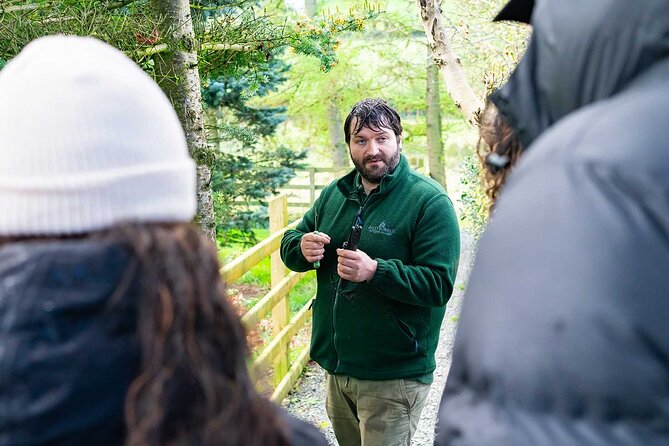
Foraging feels safer with David’s guidance. This 3.5-hour beginner course pairs a woodland forage walk with bushcraft cookery, so you learn plant basics and then turn finds into campfire food in Northern Ireland.
I like the small groups of up to 8, which keeps the pace friendly and your questions from getting lost. I also enjoy the hands-on flow, plant identification first, then food prep and tasting, including out-of-season produce so you can connect what you learn to real flavors.
One drawback to consider: with a half-day format, you’ll leave with confidence, not expert-level foraging skills, and the outdoor timing depends on the day’s weather.
In This Review
- Key Highlights I’d Plan Around
- Northern Ireland’s Wild Edibles, Explained for Real Beginners
- How the Half-Day Schedule Really Feels On the Ground
- Plant Identification That’s Built for Confidence, Not Guessing
- Responsible Foraging: The Ethics Part You Can Actually Use
- Bushcraft Cookery Over Open Fire, With Real Takeaways
- Tasting Out of Season: Why That Lesson Is Smarter Than It Sounds
- Price and Value: Is $88.24 Worth a 3.5 Hour Half-Day?
- Practical Tips So Your Day Goes Smoothly
- Who Should Book This Beginner Course (and Who Might Not)
- Should You Book This Beginner Foraging and Bushcraft Cookery Course?
- FAQ
- Where does the Adult Foraging Walk & Bushcraft Cookery Course start?
- How long is the course?
- Is the course in English?
- How large are the groups?
- What is the basic flow of the experience?
- Do I get a ticket or confirmation?
- Are service animals allowed?
- What is the cancellation policy?
Key Highlights I’d Plan Around
- Up to 8 people, so you get real time with your guide, David
- Plant identification basics before you ever pick anything
- Forage walk focused on commonly foraged plants, their seasonal availability, and uses
- Bushcraft cookery over an open fire, using what you find
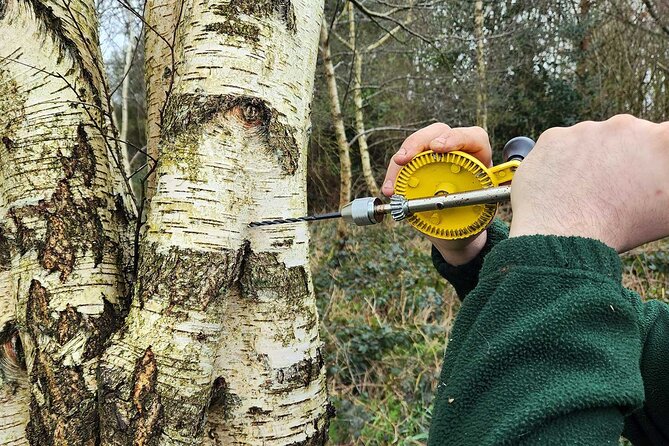
- Hands-on making, with activities like whittling and other take-home crafts mentioned in past sessions
- Tasting out of season, so you see how wild edibles work beyond the perfect week
More time outdoors, well away from the city
Northern Ireland’s Wild Edibles, Explained for Real Beginners
If you’ve ever looked at hedgerows or forest edges and wondered what’s edible, this is the kind of class that gives your brain something solid to hold onto. The goal is simple: help you identify common plants, forage responsibly, and then actually eat what you gather.
What makes this experience especially useful is the pairing of skills and payoff. You don’t just walk around admiring nature. You learn plant identification basics, you go foraging with guidance, and you end with food prepared outdoors. That connection matters because foraging is where confidence either grows fast or turns into worry.
You’ll also get a clear message around safe and sustainable foraging. The course focuses on ethical practices and minimizing environmental impact, which is the difference between grabbing snacks and learning how to be a good guest in the wild.
How the Half-Day Schedule Really Feels On the Ground
The session runs about 3 hours 30 minutes, starting at BallyBurren Outdoor Escapes at 143 Dromore Rd, Ballynahinch (BT24 8HZ). It ends back at the meeting point, so you’re not dealing with a complicated route or transportation puzzle.
Here’s how the day typically moves, in a very practical order:
You meet at the car park, then walk to the forest school site. That short transition is more than a warm-up. It helps you settle in, spot the kinds of plants you’ll be learning about, and get oriented before you start picking.
Next comes a brief introduction on plant identification. This matters because it sets the rules for what you should (and should not) trust with your own senses.
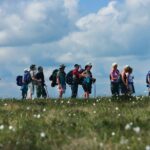
Then you head into the forage walk. This is where you put the basics into action and learn what makes certain plants recognizable, including how seasonal timing affects availability and culinary use.
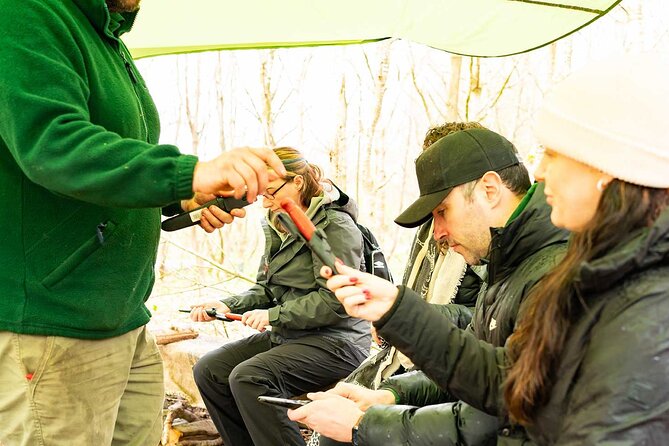
After foraging, you shift into food preparation and cooking outdoors. You’ll prepare and cook with what you found, then you finish with tasting, including out-of-season produce.
Finally, you return to the car park. It’s a tight loop, which is exactly what I like for beginners. You get repetition without losing momentum.
Plant Identification That’s Built for Confidence, Not Guessing
Plant identification can feel intimidating. The course tackles that head-on with a structured approach before you forage. You get a brief intro on how to identify plants, then you practice during the forage walk.
What you learn is grounded in real-world foraging: commonly foraged plants, what to look for, their seasonal availability, and how they’re used in cooking. For beginners, that’s the sweet spot. You’re not drowning in botanical theory. You’re learning the parts that help you make a safe decision in the field and then use the plant with purpose.
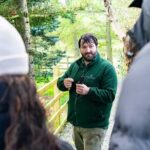
A big plus is the guide’s teaching style. In past sessions, David is described as patient and helpful, and that type of temperament matters on a class like this. If you ask a question that makes you sound unsure, you shouldn’t feel embarrassed. You should feel guided back to the basics.
Responsible Foraging: The Ethics Part You Can Actually Use
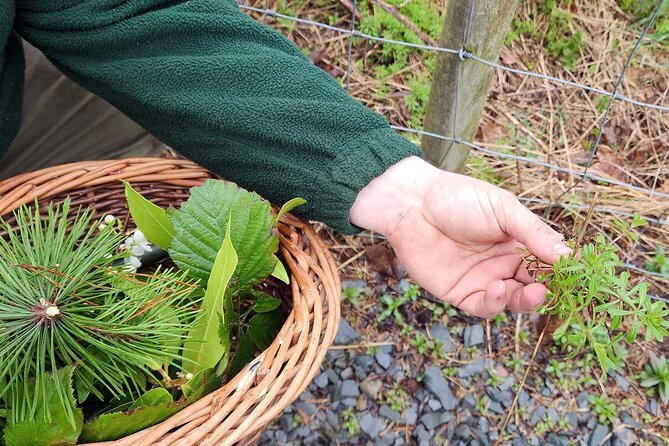
This course explicitly emphasizes ethical practices and sustainable foraging. In plain terms, that means you’re being taught to think like a steward, not a consumer.
In a beginner setting, ethical foraging is valuable for two reasons:
First, it reduces harm. When you understand how to forage responsibly, you avoid stripping a plant area or overharvesting the easy targets.
Second, it helps you come back. If you forage in a way that protects local growth and habitat, the spot stays productive, and your learning continues instead of ending with one disappointing harvest.
The course is designed to help you minimize environmental impact while still enjoying the experience. That balance is what makes it worth doing as a structured class rather than trying to wing it.
Bushcraft Cookery Over Open Fire, With Real Takeaways
This is not just a foraging class with a snack at the end. The “bushcraft cookery” piece is a core part of the experience, and it’s where a lot of the fun energy comes from.
You cook over an open fire, and you use what you foraged. That matters because it turns foraging into something tangible. You see how plants change when heated, how flavors come through, and why some ingredients work better in certain dishes than others.
Past sessions have included cooking items such as nettle soup and pizzas, plus banana desserts, including a chocolate banana style dish. Even if your exact menu varies, the pattern stays the same: you’re learning to make simple, satisfying food outdoors.
On the “bushcraft” side, you may also get hands-on crafting activities. Feedback from previous participants mentions learning to make wooden spoons and survival whistles, plus other simple tool-like making such as whittling spoons and working on mallets. That kind of practical skill building is a great bonus for beginners because it gives your day more than one kind of confidence. You leave with food knowledge and with a couple of practical objects you made.
And if you’re traveling with family or friends, this is often the part that converts a casual nature interest into an actual memory. The campfire cooking creates a shared moment.
Tasting Out of Season: Why That Lesson Is Smarter Than It Sounds
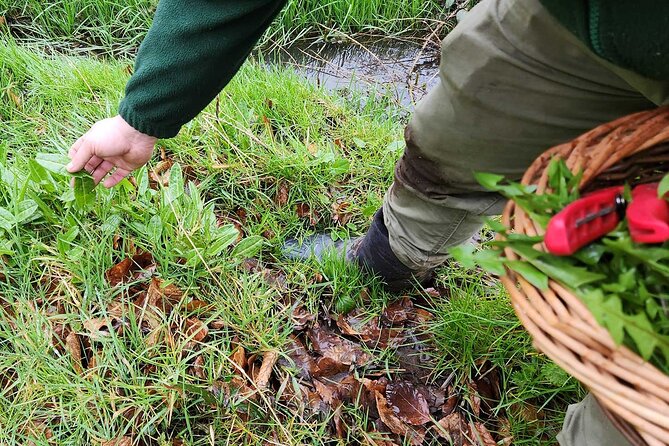
One of the more interesting elements is that you’ll do tasting of out-of-season produce. At first, that may seem like an odd detail. If you forage outdoors, shouldn’t you only eat what’s growing right now?
The value here is education. Seasonal foraging is real, and it limits what you can gather at any given time. By tasting out of season produce, you learn that wild edibles can still be part of your life beyond one green burst of the year. It also reinforces the idea that foraging skills connect to food choices, preparation methods, and planning.
For beginners, that can be the moment the course clicks. You stop thinking of foraging as a single-day activity and start thinking of it as a repeatable skill set.
Price and Value: Is $88.24 Worth a 3.5 Hour Half-Day?
At $88.24 per person for roughly 3 hours 30 minutes, the price sits in the category of experience-based learning, not a budget ticket. But for this kind of class, the value often comes from what’s included in the day.
Here’s what you’re paying for in practical terms:
You get guided teaching in plant identification and ethical foraging.
You get a foraging walk with instruction, not just a self-guided stroll.
You get outdoor food preparation and cooking over an open fire.
You also get tasting, including out-of-season produce.
You may leave with small crafted items like whistles or spoons, depending on what’s included in your session.
For me, the key value marker is the group size cap at 8 travelers. Smaller groups mean you’re more likely to get clear answers and real-time feedback. If you’ve ever tried to learn something outdoors with a large crowd, you know how quickly things get vague.
So yes, it’s not a cheap activity. But it’s also not a vague “nature walk.” It’s structured, hands-on learning with food at the center.
Practical Tips So Your Day Goes Smoothly
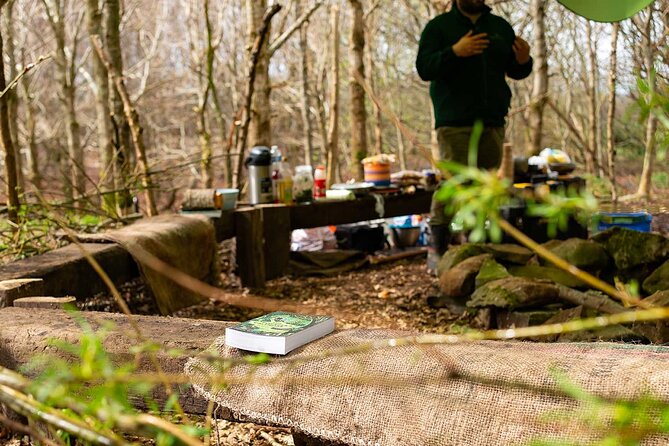
Because this is an outdoor course with a forage walk and open-fire cooking, a little planning helps. Here’s what I’d do before you go:
Wear comfortable footwear with decent grip, since you’ll be walking to and from the forest school site and moving around during foraging.
Dress in layers. Northern Ireland weather can shift fast, and the session is outdoors for multiple segments.
Bring a mindset of curiosity. You’re going to taste wild foods, learn identification basics, and ask questions. If you treat it like a learning workshop, you’ll get the most out of it.
If you’re unsure whether wild foods are your thing, don’t panic. Beginners are the target audience, and the course is designed to make the experience approachable. Still, do keep in mind that part of the fun is trying things you may not have encountered before, especially when plants like nettles show up.
Also note that the activity allows service animals, which is a good detail if you travel with a working companion.
Who Should Book This Beginner Course (and Who Might Not)
This is a strong fit if you want:
A beginner-friendly intro to foraging with plant identification and ethical basics.
An outdoor activity that ends with actual cooking and eating.
A structured half-day plan, not a multi-day wilderness course.
A small-group setting with hands-on instruction.
It may be less ideal if:
You hate walking outdoors.
You only want classroom-style learning and prefer not to handle the practical parts of the day.
You’re extremely short on time and can’t afford 3 hours 30 minutes of outdoor movement.
If you want a single day that blends nature learning with real skills and food, this course delivers that mix.
Should You Book This Beginner Foraging and Bushcraft Cookery Course?
I think you should book it if your goal is confident, beginner-level foraging plus a genuine outdoor cooking experience. The small group size, the emphasis on safe and sustainable practices, and the clear teaching style under David are the reasons it works. You’re not guessing, and you’re not just observing.
If your expectations are modest and practical, you’ll leave happy. You’ll understand how plant identification ties into what’s edible, you’ll learn ethical habits for foraging, and you’ll enjoy the payoff of campfire cooking and tasting, including out-of-season produce.
FAQ
Where does the Adult Foraging Walk & Bushcraft Cookery Course start?
It starts at BallyBurren Outdoor Escapes, 143 Dromore Rd, Ballynahinch BT24 8HZ, UK.
How long is the course?
It lasts about 3 hours 30 minutes.
Is the course in English?
Yes, it is offered in English.
How large are the groups?
This activity has a maximum of 8 travelers.
What is the basic flow of the experience?
You meet at the car park, walk to the forest school site, get a brief intro on plant identification, go on a foraging walk, do food preparation, taste out-of-season produce, then return to the car park.
Do I get a ticket or confirmation?
You receive a mobile ticket, and confirmation is received at the time of booking.
Are service animals allowed?
Yes, service animals are allowed.
What is the cancellation policy?
Cancellation is free. You can cancel up to 24 hours in advance for a full refund. If you cancel less than 24 hours before the start time, the amount you paid will not be refunded.
On Foot Around Belfast
- 1/2 Day Pilgrim’s Walk on St Patrick’s Way and Lunch
★ 5.0 · 9 reviews
More From the Northern Ireland Pile
- Game of Thrones Studio Tour Admission Ticket
★ 5.0 · 312 reviews - Guided Scenic Alpaca Trekking Experience Northern Ireland
★ 5.0 · 126 reviews - Saint Patrick Centre Exhibition experience
★ 4.5 · 33 reviews - Muddy Tots Go Wild Forest School Ballynahinch County Down
★ 5.0 · 23 reviews - Game of Thrones – Tollymore Forest Trek
★ 5.0 · 20 reviews
Out in the Open Air
- Guided Scenic Alpaca Trekking Experience Northern Ireland
★ 5.0 · 126 reviews - Muddy Tots Go Wild Forest School Ballynahinch County Down
★ 5.0 · 23 reviews - Game of Thrones – Tollymore Forest Trek
★ 5.0 · 20 reviews - 1/2 Day Pilgrim’s Walk on St Patrick’s Way and Lunch
★ 5.0 · 9 reviews
More reviews from around the north
- Adult Foraging Walk & Bushcraft Cookery Course for Beginners★ 5.0 · 5 reviews
- Unforgettable beauty of Northern Ireland from an E-Bike★ 5.0 · 9 reviews
- 1/2 Day Pilgrim’s Walk on St Patrick’s Way and Lunch★ 5.0 · 9 reviews
- Game of Thrones – Tollymore Forest Trek★ 5.0 · 20 reviews
- Muddy Tots Go Wild Forest School Ballynahinch County Down★ 5.0 · 23 reviews
- Saint Patrick Centre Exhibition experience★ 4.5 · 33 reviews
Northern Ireland Outdoor Experiences, in full.
 ★ 5.0Guided Scenic Alpaca Trekking Experience Northern IrelandFrom $69126 reviews
 ★ 5.0Muddy Tots Go Wild Forest School Ballynahinch County DownFrom $623 reviews
 ★ 5.0Game of Thrones – Tollymore Forest TrekFrom $1320 reviews
 ★ 5.0Giants Causeway Coast Sea KayakingFrom $44612 reviews
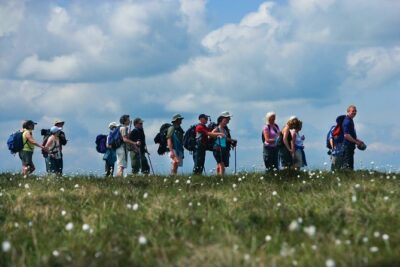 ★ 5.01/2 Day Pilgrim’s Walk on St Patrick’s Way and LunchFrom $579 reviews