
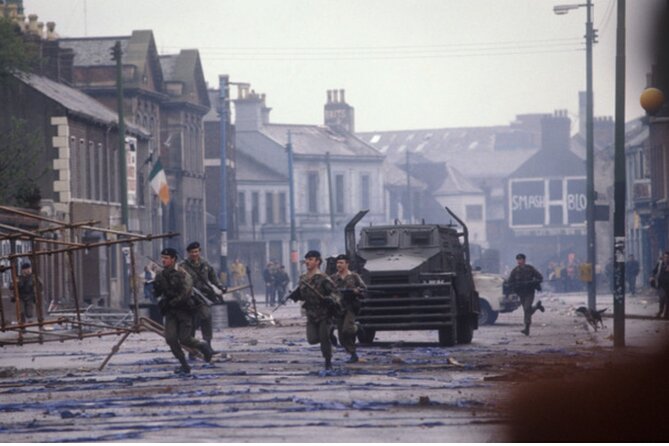
REVIEW · BELFAST BLACK TAXI TOURS
2 Hour Terror and Mural History Belfast taxi Private Tour
Murals here are political memories. In a 2 hour Belfast taxi tour, you visit Peace Wall, Divis Flats, and Falls Road murals, with a guide who keeps the story even-handed. I love the mural-led history stops that connect neighborhoods to specific events, and I like the short, tight route that gets you context fast. The only real drawback is the subject matter is heavy, so go in with the right headspace.
You start at the Leonardo Hotel Belfast and you finish back at the same place, which makes planning simple. Pickup is available at Belfast City Hall front gates within a 1 km radius, and you get a mobile ticket and English narration. This is a small group, capped at 25 people, and parking fees are included, which helps this feel like a practical use of time.
In This Review
- Key Highlights You Will Actually Care About
- A 2 Hour Taxi Tour That Moves You Through Belfast’s Toughest Stories
- Where You Start, How Pickup Works, and What to Expect Day Of
- Peace Wall and Divis Flats: How Belfast Divided Itself, Then Tried to Heal
- Peace Wall, 20 minutes, admission included
- Divis Flats (and the “Fort Apache” rooftop idea), 10 minutes
- Falls Road Murals: International Solidarity and the Bobby Sands Legacy
- International Wall on Falls Road, 10 minutes, free
- Bobby Sands mural, 10 minutes, free
- Clonard Monastery and Martyrs Garden: A Peace Process Built by People
- Clonard Monastery, 10 minutes, free
- Clonard Martyrs Memorial Garden, 15 minutes, free
- Crumlin Road Gaol and Courthouse: Trials, Hunger Strikes, and That Tunnel Idea
- Crumlin Road Gaol, 10 minutes, free
- Belfast Peace Lines (Bombay Street) and Shankill Road Murals: Two Sides, One City
- Bombay Street and Belfast Peace Lines, 15 minutes, free
- Shankill Road, 20 minutes, free
- Price and Value in a Two Hour Window
- Who This Tour Suits Best, and When to Skip It
- Should You Book the 2 Hour Terror and Mural History Belfast Taxi Tour?
- FAQ
- How long is the tour?
- What is the meeting point?
- Do you offer pickup?
- Is there a mobile ticket?
- What language is the tour in?
- How many people are in the group?
- Is admission included anywhere?
- What is included in the price?
- Is coffee or alcohol included?
- What is the cancellation policy?
Key Highlights You Will Actually Care About
- Peace Wall plus Divis Flats: two of the most direct, physical reminders of how neighborhoods were divided
- Falls Road murals with clear names: International Wall, Bobby Sands mural, and the stories tied to them
- Clonard Monastery and the Father Alec Reid connection: the peace-process side, not just conflict
- Crumlin Road Gaol and Courthouse: prisoners, trials, and that famous connecting tunnel idea
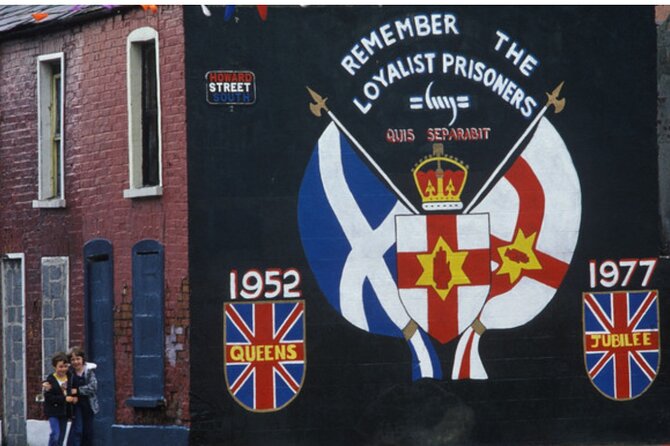
- Bombay Street and Shankill Road: Provisional IRA origins and loyalist paramilitary history through murals
- Two hours, short stops: 10 to 20 minute visits keep it focused, but you will not linger
Other black cab drivers we have ridden with in Belfast
A 2 Hour Taxi Tour That Moves You Through Belfast’s Toughest Stories
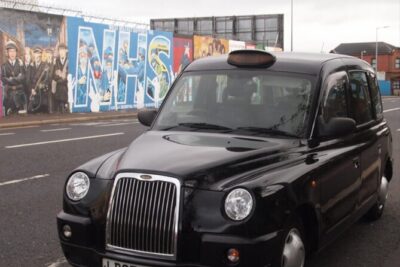
This is a 2 hour Belfast taxi tour built for people who want meaning, not just photos. You are taken between West Belfast, North Belfast, and back again, with short guided walks and quick, targeted stops. The style is practical: each location is a clue, and the guide helps you connect the dots between murals, buildings, and the wider Troubles era.
At $190.59 per person, it is not cheap, but the pricing makes sense if you value guided context and efficient movement. In a short window, the tour hits multiple major sites linked to political violence, community life, and the peace process. If you are the kind of traveler who gets frustrated by self-guided muddle, this format is a strong fit.
You also get a small group limit, up to 25 travelers, which keeps the pacing from turning into a school bus line. And from the reviews, the tour stands out because the guide approach is framed as balanced, with an emphasis on facts and consequences rather than slogans. One guest even noted their guide had been shot during the Troubles, which helps explain why the storytelling can feel grounded and not performative.
The biggest consideration: the places you visit are reminders of conflict. Even when the guide stays fair, you are looking at symbols tied to loss, surveillance, hunger strikes, and violent campaigns. If you prefer cheerful history only, this will feel intense. If you want to understand modern Belfast, it is exactly the kind of route that teaches you why the murals matter.
Where You Start, How Pickup Works, and What to Expect Day Of
The tour starts at the Leonardo Hotel Belfast, on Great Victoria Street, and it ends back at the meeting point. That round-trip setup is simple for planning meals and timing your next stop in the city.
Pickup is not a free-for-all. Cruise ship pickup is not offered because the sites are several miles outside Belfast city centre. If you are close by, you can arrange free pickup outside Belfast City Hall front gates, but only within a 1 km radius. If you are coming from the cruise ship shuttle, the note explains it drops you outside Visit Belfast, which is across the street from City Hall, so you have a clear reference point.
You should also know what is included and what is not, because it affects how you manage your comfort. Parking fees are included. Peace Wall has an admission ticket included, while several other stops are listed as free. Coffee and alcohol are not included, so plan accordingly.
Finally, this tour is in English and you will receive confirmation at booking. Service animals are allowed, and the tour is near public transportation, which helps if you are adjusting your plan.
Peace Wall and Divis Flats: How Belfast Divided Itself, Then Tried to Heal
This tour begins by introducing you to the most physical part of the Troubles: barriers and built-in separation.
Other Troubles history tours, reviewed the same way
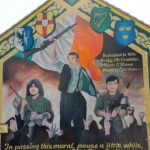
Peace Wall, 20 minutes, admission included
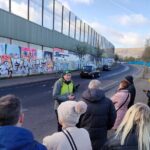
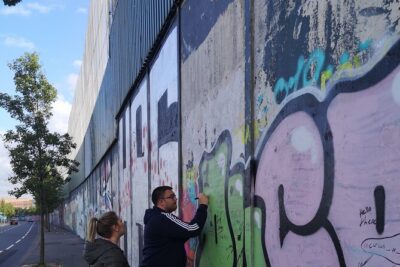
You spend about 20 minutes at Belfast’s Peace Walls, erected in the late 1960s. These are towering barriers marked by murals and graffiti, originally built to separate Protestant and Catholic neighborhoods. The key thing I like about starting here is that it frames the whole Belfast mural story in one visual idea: these are not just artworks, they were built into daily life.
You will also learn how the walls still function in the present, with gates closing nightly in some areas. That detail matters because it shows how the past can continue to shape routines. The guided approach is focused on why the murals exist where they do, and what the community’s push toward peace looks like when you can literally see the divide.
Divis Flats (and the “Fort Apache” rooftop idea), 10 minutes
Next you go to Divis Flats in West Belfast, a landmark from the late 1960s. The description here hits hard, because Divis quickly became a hotspot for sectarian violence and unrest. The area was predominantly Catholic, and conflict with British security forces intensified over time.
A defining element is the British Army base established on the rooftop of the tallest building, known as Fort Apache. It offered a strategic vantage point, but it also became a symbol of surveillance and tension inside a residential setting.
You get a short visit, about 10 minutes, so you should treat this stop as orientation. You are not touring every room. What you are doing is learning the logic of why certain neighborhoods felt watched and targeted, and why that changed community trust. Even with only a brief stop, it is one of the most direct ways to understand how “security” can become part of the conflict.
Falls Road Murals: International Solidarity and the Bobby Sands Legacy
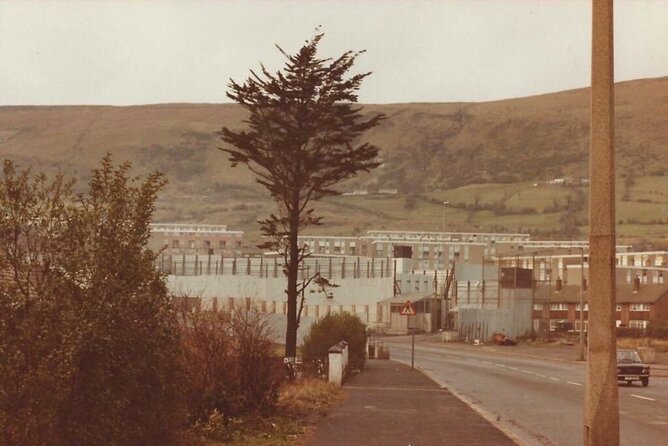
From Divis, the tour moves into the Falls Road mural zone, where the art is often tied to specific people, organizations, and international connections.
International Wall on Falls Road, 10 minutes, free
You have about 10 minutes at the International Wall on Falls Road. This is an expansive mural wall established in the 1980s that addresses local and international issues. The point is not just Belfast politics in a bubble. You will see themes that connect the Troubles era to global human rights struggles, with ideas like resistance, peace, and community resilience showing up repeatedly.
For me, this stop works because it broadens your understanding. If you only look at Belfast as an isolated fight between neighbors, you miss how many communities framed their struggle in international terms. The guided explanation helps translate what you are seeing into a bigger set of political signals.
Bobby Sands mural, 10 minutes, free
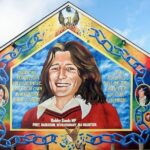
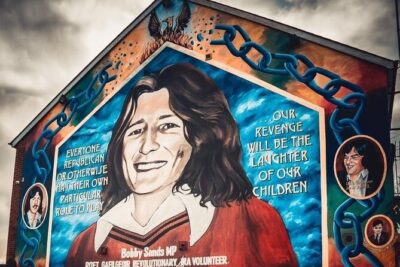
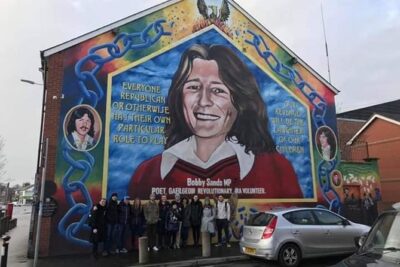
Then you go to the Bobby Sands mural, one of the best-known pieces on Falls Road. It is dedicated to Bobby Sands, a member of the Provisional Irish Republican Army (IRA) who died during a hunger strike in 1981. He was also elected as a Member of Parliament during the strike, which is one of those facts that changes how you interpret a memorial wall.
The guide ties this back to the wider Troubles context, including clashes between the IRA and British forces, and the IRA’s activity in the Falls Road area. Today, the mural functions as both a historical marker and an ongoing symbol connected to the quest for freedom and justice.
Because the time is short, you do not need to rush, but you also should not expect a long chat. Use the guidance you are given to understand who Sands was and why this mural became so iconic. If you care about modern politics, this is the kind of stop where the art feels like a condensed argument.
Clonard Monastery and Martyrs Garden: A Peace Process Built by People
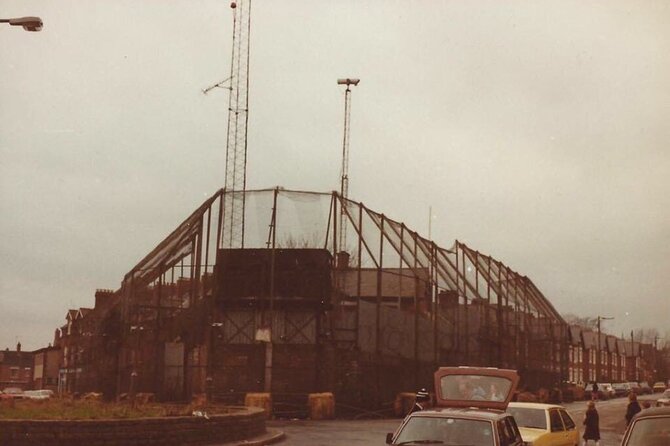
Not every stop on this tour is about conflict. In West Belfast, you get the peace-process side in a setting that feels calmer and more reflective.
Clonard Monastery, 10 minutes, free
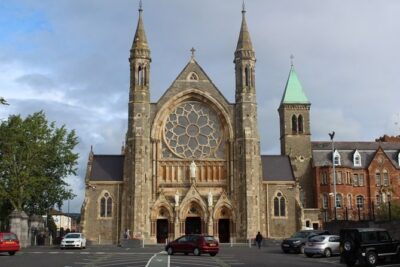
You visit Clonard Monastery, established in 1896. The guide explains that Father Alec Reid and other priests played a key behind-the-scenes role mediating between conflicting parties during the Troubles. The most important detail is that the work helped set up dialogue that eventually contributed to the Good Friday Agreement in 1998.
I like that the tour does not stop at “the violence happened.” It also shows how relationships, persuasion, and negotiation were part of the story. If your brain keeps jumping only to cause and reaction, this stop forces a second question: how do communities talk when they have every reason not to?
Clonard Martyrs Memorial Garden, 15 minutes, free
Beside the monastery, you also visit the Clonard Martyrs Memorial Garden. This is a remembrance garden honoring local lives lost during the Troubles, with plaques and memorials among greenery. It is meant for reflection, and the guided visit focuses on personal cost and community sacrifice.
This stop is longer than some of the other mural moments, about 15 minutes, and it often feels like the tour’s emotional reset. You get space to think without a constant stream of names and dates. If you are someone who absorbs better through stillness, you will appreciate this segment.
Crumlin Road Gaol and Courthouse: Trials, Hunger Strikes, and That Tunnel Idea
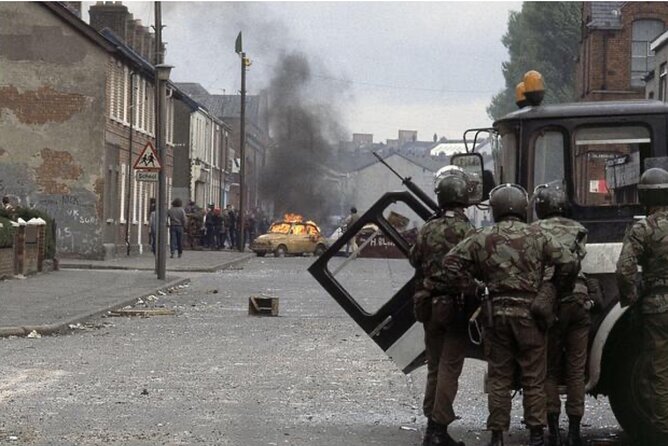
Next, the tour shifts to North Belfast and the Crumlin Road Gaol and Courthouse, historic landmarks tied directly to the Troubles. This is not a symbolic stop. It is a place built for confinement and punishment, and it carries that weight even in a short visit.
Crumlin Road Gaol, 10 minutes, free
The gaol, built in the 19th century, housed both political and criminal prisoners. The guide explains that this included members of the IRA and loyalist paramilitaries. During the Troubles, it became a site of intense tension, with escapes, hunger strikes, and riots.
One of the strongest details here is the tunnel connecting the jail to the courthouse. The description frames it as the direct path many prisoners took to face trials. Even without a long walkthrough, understanding that physical connection helps you picture the system in motion, not just the outcomes.
The guided tour of the restored gaol focuses on grim realities of prison life and the broader impact on Belfast society. With only 10 minutes, treat it as a clear introduction, then let the guide’s framing guide what you notice.
Belfast Peace Lines (Bombay Street) and Shankill Road Murals: Two Sides, One City
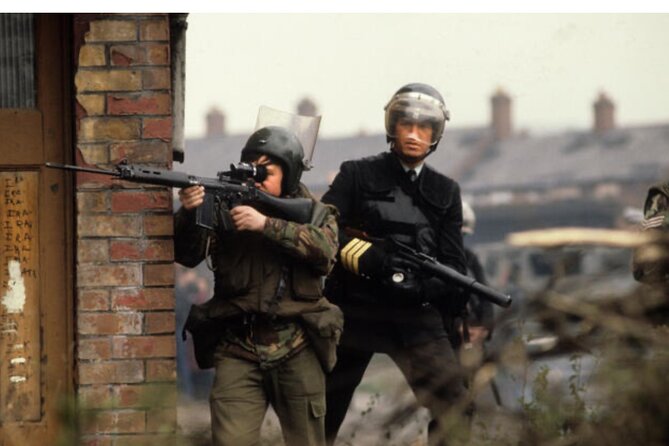
The last part of the tour brings you into two mural-heavy neighborhoods that shaped the Troubles from different directions.
Bombay Street and Belfast Peace Lines, 15 minutes, free
You go to Bombay Street in West Belfast, described as the birthplace of the Provisional Irish Republican Army in 1969. In August 1969, intense sectarian riots erupted and homes on Bombay Street were destroyed, displacing Catholic families who felt abandoned by the state and by existing IRA structures.
The guide explains that a faction broke away to form the Provisional IRA, with an aim to defend nationalist communities and pursue Irish reunification through armed resistance. This stop gives you the origin story behind a major shift in the Troubles.
Today, visitors can see memorials and restored homes. That mix of destruction reminders and rebuilding matters. It tells you the community did not just survive, it insisted on moving forward while still remembering what happened.
Shankill Road, 20 minutes, free
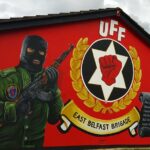
Then you head to Shankill Road, historically significant as a birthplace of loyalist paramilitary groups: the Ulster Volunteer Force (UVF) and the Ulster Freedom Fighters (UFF). The guide includes key timeline points, like the UVF forming in 1966 and the UFF established in 1973 as a cover name for the Ulster Defence Association (UDA).
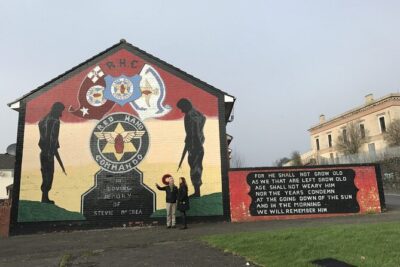
The political murals on Shankill Road depict loyalist history and ideals, commemorating figures and events from that side of the conflict. Importantly, the guided approach is meant to give you context for what you see, including the complexity of the era.
This is a good ending to the tour. You have seen barriers, murals connected to hunger strike martyrdom, a prison system, peace mediation, and now you also see how murals communicate loyalist identity. For anyone who wants a more complete picture of Belfast murals, this last stretch helps you avoid the trap of thinking there is only one narrative on the wall.
Price and Value in a Two Hour Window
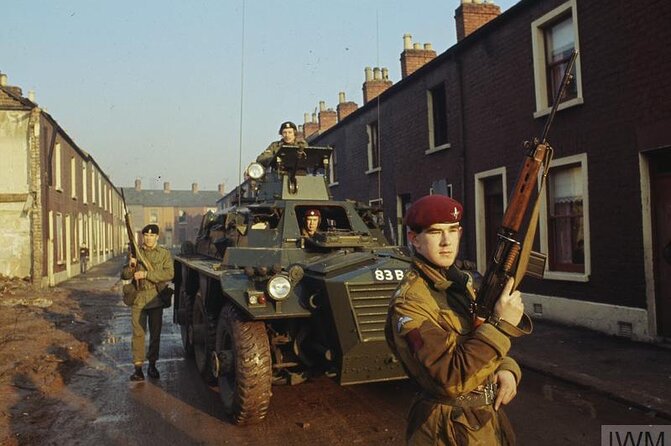
At $190.59 per person, this tour feels like a premium experience, but it is not just for convenience. You are paying for structure, context, and transportation between multiple sites that are not meant to be stitched together by wandering.
Here is what you do get that helps justify the cost:
- A guided interpretation at each key location rather than leaving you to guess what the murals mean
- Short but meaningful time blocks, with most stops 10 to 20 minutes, so you cover a lot without turning it into a full day
- Taxi movement that saves you the friction of figuring out routes across different parts of Belfast
- Parking fees included, and Peace Wall admission included, with several other stops listed as free
What you do not get is also important. Coffee and alcohol are not included, and you are not promised any extended museum-style time. This is a focused history orientation, not a deep archive visit.
From a value perspective, it tends to work best if you are a first-timer to Belfast or you already know you want modern history but do not want to spend hours planning routes. If you love art but want the political context too, this is likely a strong match.
Who This Tour Suits Best, and When to Skip It
This tour suits you if:
- You want modern Belfast history explained through murals and landmark places
- You like a guide who gives context to what you are seeing, not just an address list
- You want a short, transport-friendly format that still touches major sites like Peace Wall, Divis, Clonard, and Crumlin Road Gaol
You might skip it if:
- You are strongly uncomfortable with politically charged topics and conflict memory
- You expect long time at each stop, because many segments are 10 minutes
- You prefer a lighter city walk focused on architecture or everyday shopping streets
Should You Book the 2 Hour Terror and Mural History Belfast Taxi Tour?
I think you should book if you want the fastest way to understand why Belfast murals are not decoration. In two hours, you get a guided pathway through separation walls, surveillance-linked flats, Falls Road memorial art, peace mediation at Clonard, the prison system at Crumlin Road Gaol, and the different political origins shown through murals on Bombay Street and Shankill Road.
One last practical point: because the tour centers on the Troubles and political violence, I recommend going with patience and a willingness to learn. If you are ready for heavy topics delivered in a balanced, factual way, this is a smart use of time in Belfast. If you want a relaxing sightseeing day only, look for something else.
FAQ
How long is the tour?
It runs for about 2 hours.
What is the meeting point?
The tour starts at the Leonardo Hotel Belfast, Great Victoria Street, Belfast BT1 6DY.
Do you offer pickup?
Yes. You can arrange a free pickup outside Belfast City Hall front gates within a 1 km radius. Cruise ship pickup is not offered.
Is there a mobile ticket?
Yes, a mobile ticket is offered.
What language is the tour in?
The tour is offered in English.
How many people are in the group?
The tour has a maximum of 25 travelers.
Is admission included anywhere?
Peace Wall admission is included. The other listed stops are marked as free.
What is included in the price?
Parking fees are included.
Is coffee or alcohol included?
No. Coffee and alcoholic beverages are not included.
What is the cancellation policy?
Free cancellation is available. You can cancel up to 24 hours in advance for a full refund.
The Walls and the Gables
- Belfast’s Political Mural Taxi Tour
★ 5.0 · 1,180 reviews - Famous 1.5 hour Belfast Murals Tour
★ 5.0 · 477 reviews - Belfast Murals Taxi Tour
★ 5.0 · 341 reviews - 2 Hour Private Belfast Taxi Cab Tour of Troubles & Peace walls
★ 5.0 · 240 reviews - Private Political History & Murals Tour Belfast
★ 5.0 · 182 reviews
The Troubles, Told Firsthand
- A History of Terror – Belfast City Centre Walking Tour
★ 5.0 · 2,883 reviews - Belfast’s Political Mural Taxi Tour
★ 5.0 · 1,180 reviews - Belfast Troubles Tour: Walls and Bridges
★ 5.0 · 853 reviews - Belfast Political Tour-Conflicting Stories Walking Tour
★ 4.5 · 459 reviews - Political Taxi Tour Belfast (1-7 People)
★ 5.0 · 294 reviews
Belfast, From the Back of a Cab
- Cab Tours Belfast Famous Black Taxi Tours
★ 5.0 · 3,633 reviews - Private Black Taxi Belfast City Tour
★ 5.0 · 2,188 reviews - Belfast’s Political Mural Taxi Tour
★ 5.0 · 1,180 reviews - Belfast black taxi tours
★ 5.0 · 1,166 reviews - Official World Famous Belfast Taxi Tour ™
★ 5.0 · 623 reviews
More reviews from around the north
- Belfast history of terror & mural 1 hr express private taxi tour★ 5.0 · 3 reviews
- Game of Thrones scene location inc Giants causeway from Belfast★ 5.0 · 3 reviews
- Experience the Antrim Coast and the Land of Giants – Private Tour★ 5.0 · 3 reviews
- Giants Causeway Tour From Belfast including Game of thrones sites★ 5.0 · 3 reviews
- Private Coast Tour in Belfast★ 5.0 · 3 reviews
- Belfast to Dublin Transfer★ 5.0 · 3 reviews
Belfast Black Taxi Tours, in full.
 ★ 5.0Cab Tours Belfast Famous Black Taxi ToursFrom $1003,633 reviews
 ★ 5.0Private Black Taxi Belfast City TourFrom $1102,188 reviews
 ★ 5.0Belfast’s Political Mural Taxi TourFrom $481,180 reviews
 ★ 5.0Belfast black taxi toursFrom $551,166 reviews
 ★ 5.0Official World Famous Belfast Taxi Tour ™From $90623 reviews
 ★ 5.0Iconic Belfast Black Cab TourFrom $97449 reviews
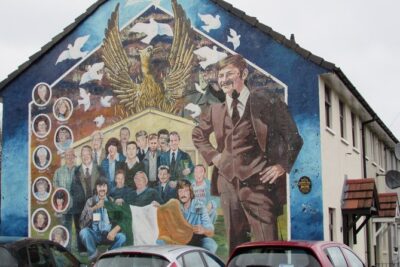 ★ 5.0Belfast Murals Taxi TourFrom $62341 reviews
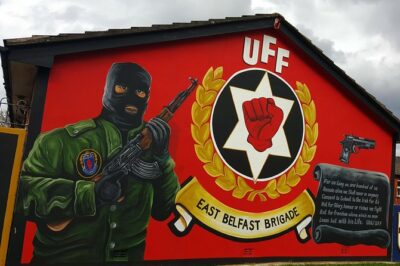 ★ 5.0Political Taxi Tour Belfast (1-7 People)From $51294 reviews